Skip to main content
Skip to footer
Skip to main content
Skip to footer

Become a Marketing Consultant, Marketing Strategy
How Can a Marketing Consultant Add Value to a Business?

Unlocking Business Growth Through Strategic Marketing Consultancy
For many small and medium-sized businesses, marketing remains one of the most misunderstood functions. It is often perceived as a cost rather than a critical investment or as a series of creative activities rather than a structured, data-driven process that drives profitability. Yet, when marketing is managed strategically, it becomes one of the most powerful tools for business growth. This is where a marketing consultant adds real value.
A professional marketing consultant does far more than create ads or suggest promotional campaigns; they guide businesses to make better commercial decisions, optimise their marketing spend, and establish a roadmap for sustainable growth.
The Strategic Marketing Mastery course from Opportunity Marketing helps business owners, managers, and marketers build the same strategic foundations that professional marketing consultants use to drive growth and profitability. Through its ten structured modules, participants learn how to create data-led marketing strategies, define clear business objectives, identify target audiences, and develop action plans that deliver measurable results. This course empowers learners to think strategically, make confident marketing decisions, and transform their marketing from a cost into a powerful investment that adds long-term value to their business. Contact Us: 0333 320 4108 or info@opportunitymarketing.co.uk.
Why Businesses Struggle to See Marketing’s True Value
Many businesses face marketing frustrations because they lack strategic direction. They often jump straight into executional tactics, running social media ads, redesigning their website, or investing in pay-per-click campaigns, without first understanding their audience, competitive positioning, or business objectives. Without a solid strategic foundation, these efforts rarely generate meaningful returns.
A marketing consultant helps resolve this disconnect. They provide a commercial framework that links marketing activity to business outcomes. Their approach goes beyond aesthetics and messaging; they focus instead on results, data, and customer behaviour. This shift from tactical execution to strategic marketing can change how an organisation operates. Businesses begin to view marketing not as an isolated cost centre but as a key profit driver that contributes to revenue growth, market share, and brand equity.
Understanding What a Marketing Consultant Actually Does
A marketing consultant acts as a strategic partner to a business, offering a combination of analysis, planning, and performance management. Their work begins with understanding the business’s current position, its products or services, market share, competitors, and customer base. They then identify where improvements can be made, both in terms of strategy and execution.
Unlike marketing agencies, which often focus on selling predefined services like SEO, PPC, or graphic design, a marketing consultant takes a broader, impartial perspective. They do not sell services; they sell insight. Their goal is to identify what is best for the business, not what earns them the highest fee. This independence allows them to diagnose the root causes of underperformance and recommend the right actions.
At Opportunity Marketing, for example, consultants use proven frameworks such as the Fast Track Marketing Plan, Marketing Health Check Audit, and Marketing Mentoring to guide businesses through structured, results-focused processes. Each service is designed to deliver clarity, measurable improvement, and long-term growth.
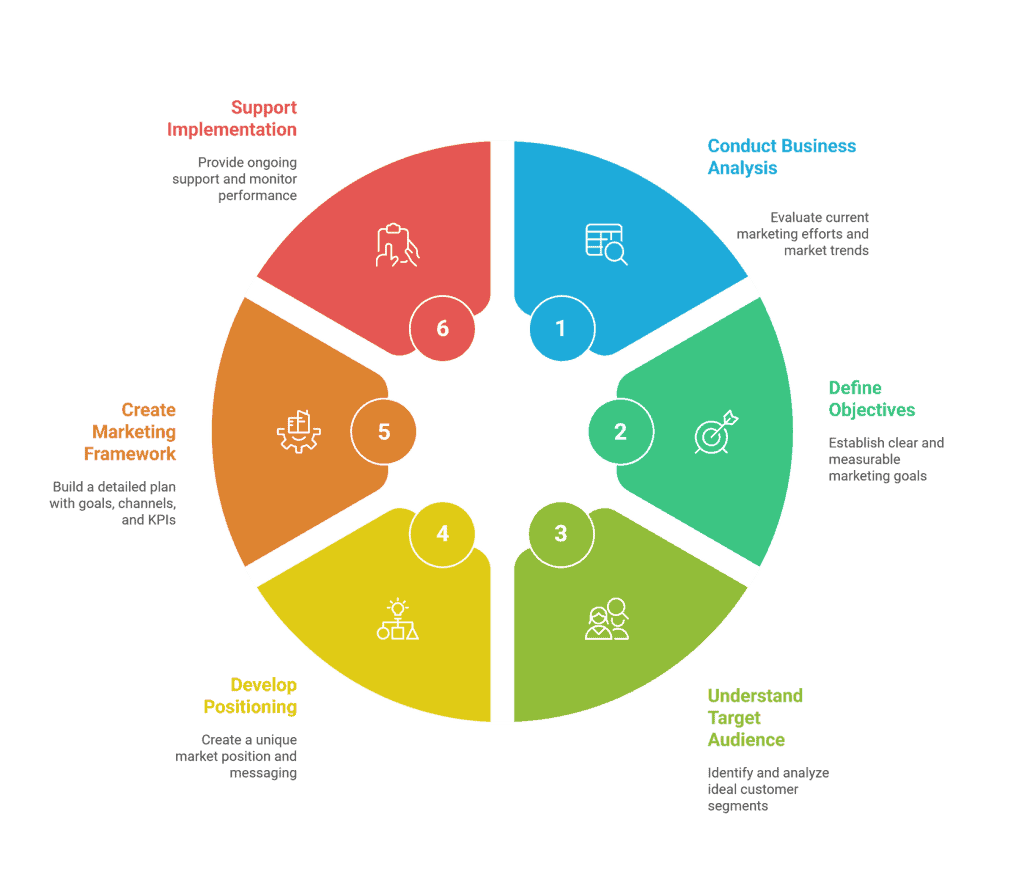
Establishing a Strategic Foundation: The True Starting Point
Every effective marketing programme begins with a clear strategy. A marketing consultant starts by assessing the current situation and identifying gaps in the business’s understanding of its market. This involves a detailed review of internal and external factors:
- Market and Audience Analysis: Understanding who the customers are, what they need, and what motivates their purchasing decisions.
- Competitor Evaluation: Identifying how competitors are positioned, where they excel, and where there are opportunities to stand out.
- SWOT Analysis: Recognising strengths, weaknesses, opportunities, and threats that influence marketing decisions.
- Goal Setting: Establishing measurable business objectives tied directly to marketing activity.
This groundwork allows the consultant to create a clear, evidence-based marketing strategy. Rather than guessing what might work, the business follows a structured plan built on data and insight. The outcome is improved confidence in decision-making, better prioritisation of resources, and more predictable results.
Defining and Understanding the Right Audience
Targeting everyone rarely works. Businesses often waste time and money speaking to audiences that will never convert. A marketing consultant helps define who the ideal customer really is by building accurate audience segments and detailed buyer personas.
This process involves analysing customer data, identifying behavioural patterns, and mapping out what drives buying decisions. The consultant then helps the business create marketing messages that appeal directly to those audiences. This targeted approach not only increases conversion rates but also reduces wasted marketing spend.
For instance, Opportunity Marketing’s Fast Track Marketing Plan helps businesses identify their most profitable audience segments. It defines their core customer base, pinpoints unmet needs, and creates value propositions that resonate. The result is focused marketing that attracts the right leads and drives profitable growth.

Clarifying Positioning and Messaging
Positioning is about defining how a business wants to be perceived in the market. It’s the space it occupies in the customer’s mind relative to competitors. Many businesses either fail to define their positioning clearly or send mixed messages that confuse potential clients.
A marketing consultant helps refine a business’s positioning by aligning it with customer expectations, competitive realities, and unique strengths. This clarity allows the business to communicate a consistent message across every channel, from website content and sales presentations to advertising and social media.
Once the positioning is set, the consultant works on crafting messaging that resonates. Strong messaging articulates what the business does, why it matters, and why it’s the best choice. It bridges the gap between the business’s internal vision and the customer’s external perception, creating a powerful, unified narrative.
Building an ROI-Driven Marketing Strategy
The true test of any marketing activity lies in its return on investment (ROI). A marketing consultant builds strategies that are data-driven, measurable, and financially accountable. This means every action, whether it’s a campaign, event, or digital ad, is tied to a clear commercial objective.
Consultants use performance metrics such as cost per acquisition, customer lifetime value, and conversion rate to evaluate success. They focus on improving profitability, not vanity metrics like likes or impressions. For example, Opportunity Marketing’s approach, inspired by The Maths Behind Marketing, helps businesses understand the financial logic behind marketing. Consultants use proven equations to measure performance and identify where small changes can yield substantial returns.
An ROI-driven strategy gives business leaders confidence that their marketing investment is working. Instead of guessing, they can track results, measure outcomes, and make adjustments based on evidence.
Turning Strategy into Action
Once a strategic plan is in place, execution becomes the next challenge. Many businesses struggle to translate a well-written strategy into practical action. A marketing consultant bridges this gap by developing detailed implementation plans that outline activities, timelines, and responsibilities.
The consultant helps the business prioritise the right tactics and coordinates with external suppliers, such as design agencies, copywriters, and digital marketing firms, to ensure all activities align with the strategic objectives. Opportunity Marketing’s Outsourced Marketing service, for instance, allows businesses to access senior marketing expertise on a flexible basis without hiring full-time staff.
This approach combines strategic oversight with operational support, ensuring marketing execution remains consistent, efficient, and measurable. The consultant essentially becomes an extension of the business, guiding activities while maintaining a focus on long-term growth.
Mentoring and Upskilling Internal Teams

A key way a marketing consultant adds value is through knowledge transfer. Many SMEs rely on junior marketing staff or general managers who handle marketing without formal training. A consultant provides mentoring, guidance, and frameworks to upskill these individuals and build internal capability.
Through structured mentoring sessions, businesses learn how to manage their marketing strategically, interpret data, and make informed decisions. Opportunity Marketing’s Marketing Mentoring service provides this support, helping both business owners and marketing professionals build confidence and competence.
Upskilling internal teams leads to several benefits: reduced reliance on external agencies, improved efficiency, and a culture of continuous improvement. The business gains both immediate value from consultancy support and lasting value through stronger in-house marketing knowledge.
Measuring and Optimising Performance
A marketing consultant doesn’t just create a strategy and walk away; they monitor results and help businesses adapt. Continuous measurement is a critical part of maximising marketing value. Consultants identify which activities deliver the best ROI, where budget is being wasted, and what adjustments can improve performance.
Performance tracking involves regular reporting on key indicators such as lead generation, conversion rates, customer retention, and profitability. Consultants also conduct periodic marketing audits, such as Opportunity Marketing’s Marketing Health Check, to assess what’s working and what isn’t.
Optimisation is not a one-off event; it’s a recurring process. As market conditions, customer behaviours, and technology evolve, a consultant helps businesses adapt. This agile approach ensures the marketing strategy remains relevant, effective, and aligned with business goals.
The Commercial Impact of a Marketing Consultant
The measurable benefits of engaging a marketing consultant go far beyond marketing itself. The commercial impact spans across every part of the business:
- Financial Efficiency: Marketing budgets are used more effectively, reducing waste and maximising returns.
- Revenue Growth: Improved targeting and conversion lead to increased sales.
- Customer Retention: Stronger brand loyalty and improved communication enhance repeat business.
- Operational Clarity: Clear processes and priorities reduce confusion and inefficiency.
- Business Confidence: Decision-making becomes data-led and evidence-based.
Businesses that work with strategic marketing consultants often experience higher ROI and greater stability. They gain a clearer understanding of where growth opportunities lie and how to reach them with minimal risk.
Objectivity and Independence: Why Consultants Are Different from Agencies
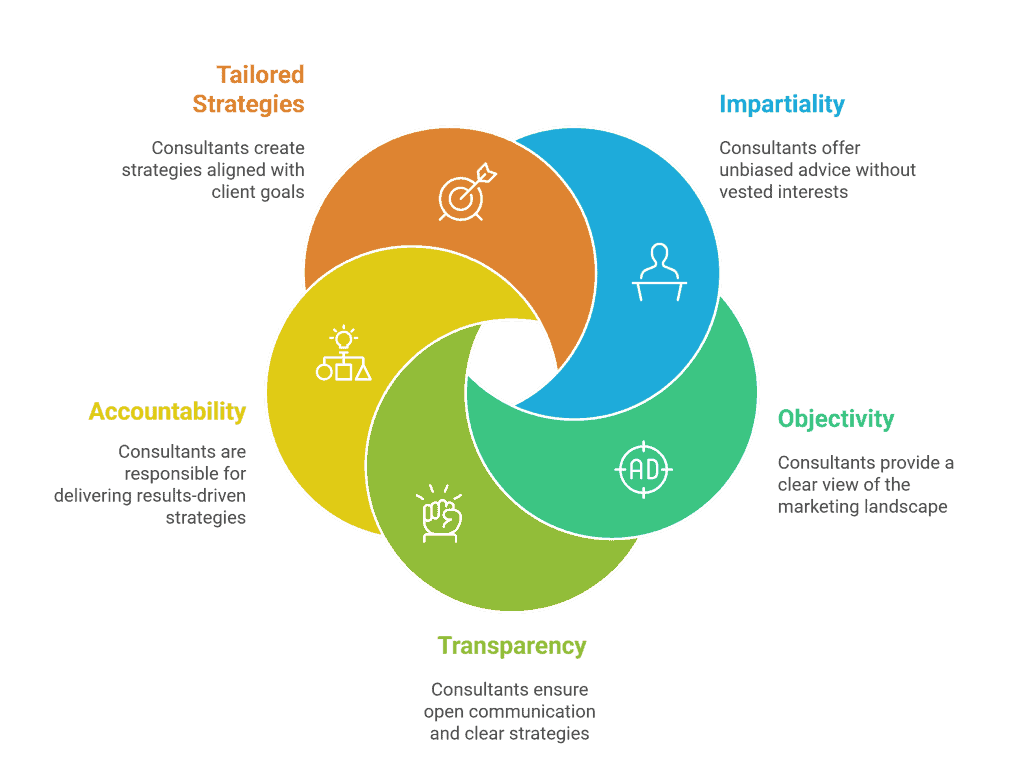
One of the biggest advantages of working with a consultant is impartiality. Unlike marketing agencies that profit from selling specific services such as SEO or paid advertising, consultants are independent. They are not motivated by commissions or project fees tied to a single channel. Their recommendations are based solely on what delivers results.
This independence allows consultants to take an objective view of the entire marketing landscape. Consultants can pinpoint misaligned or unnecessary activities and refocus efforts on strategies with greater impact. Opportunity Marketing, for example, operates without vested interests in executional services, which guarantees unbiased advice tailored to each client’s goals.
For businesses that have become disillusioned with agency-driven marketing, a consultant provides clarity, transparency, and accountability. The business receives a strategy built around its commercial priorities, not the agency’s sales targets.
Supporting Sustainable Growth Through Long-Term Partnerships
A marketing consultant’s value extends far beyond a one-time project. Many businesses choose to maintain ongoing relationships through retained consultancy, outsourced marketing, or mentoring arrangements. This long-term partnership allows consultants to continuously review, refine, and adapt marketing strategies as the business evolves.
Over time, consultants become deeply familiar with the organization’s structure, marketing, and objectives. This allows them to act as a trusted advisor, helping steer marketing efforts through changing conditions and new opportunities. Consistent guidance helps businesses build momentum, avoid common pitfalls, and maintain sustainable growth.
Opportunity Marketing has designed its service model to achieve this long-term impact. The combination of strategic planning, implementation support, and continuous mentoring provides clients with structure, accountability, and measurable outcomes.
Adapting to Modern Marketing Challenges
The marketing environment is constantly changing. Consumer behaviour, technology, and competition evolve rapidly, creating new challenges for businesses. A marketing consultant adds value by helping organisations navigate complexity. They stay current with emerging trends, tools, and platforms, translating them into practical, results-orientated strategies.
For instance, consultants can guide businesses by adapting to changes in search engine algorithms, leveraging automation tools, or using data analytics to predict customer behaviour. They also help integrate new technologies, such as AI-driven insights, into existing marketing systems.
Consultants also play a vital role in helping businesses future-proof their strategies. They identify shifts in customer expectations, regulatory changes, and market disruptions early, allowing businesses to stay ahead rather than react under pressure.

When to Engage a Marketing Consultant
Knowing when to bring in a marketing consultant can make a significant difference to business performance. The following scenarios often indicate that strategic consultancy is needed:
- Marketing spend is increasing, but results are flat.
The business may be investing heavily in marketing activities without seeing measurable improvement. - The organisation lacks a clear marketing strategy.
Without a plan, activities become reactive, inconsistent, and difficult to measure. - Leadership feels uncertain about marketing decisions.
Business owners and directors may feel they lack the insight to make informed choices. - Multiple agencies are involved but lack coordination.
Fragmented efforts often result in duplicated work, mixed messaging, and wasted resources. - There is no internal marketing expertise.
SMEs with limited in-house knowledge can benefit from external guidance and mentoring.
Engaging a consultant early in these situations saves time, money, and frustration. The consultant’s role is not just to fix problems; it is to prevent them by building a coherent strategy from the outset.
How Opportunity Marketing Adds Value to Businesses
Opportunity Marketing exemplifies how a strategic marketing consultancy can drive real value for SMEs. Founded in 2008, the consultancy operates on a clear principle: strategy before execution. This philosophy underpins every service it provides, ensuring that every marketing action stems from a well-defined plan.
Key Services That Deliver Value
- Fast Track Marketing Plan
A structured four-week consultation that gives businesses a clear, actionable marketing roadmap. It identifies key objectives, target audiences, and activities that will generate the highest ROI. - Outsourced Marketing
A flexible alternative to hiring in-house marketing staff. Opportunity Marketing acts as an external marketing department, managing implementation while maintaining strategic oversight. - Marketing Mentoring
A hands-on development service for business owners or junior marketers who need guidance in executing and managing marketing strategies effectively. - Marketing Health Check Audit
An independent evaluation of current marketing activities, identifying areas of inefficiency and opportunity for improvement. - White Label Strategy Support
A service for agencies and consultants who wish to offer strategic marketing under their brand.
Each service reflects Opportunity Marketing’s impartiality, transparency, and results-driven approach. Clients benefit from structured processes, detailed reporting, and consistent support tailored to their business needs.
Linking Consultancy to Marketing Education

Opportunity Marketing’s commitment to adding value extends beyond consultancy into education and professional development. The business offers specialised online training courses that teach the principles of strategic marketing to both individuals and organisations.
- Become a Marketing Consultant: A 10-module online course designed for experienced marketers transitioning to consultancy. It provides proven tools, templates, and methodologies to build a successful independent practice.
- Strategic Marketing Mastery: A 10-module training course for business owners and junior marketers to learn how to develop and implement effective marketing strategies that deliver profitable growth.
These educational programmes empower participants to think strategically, apply commercial logic, and manage marketing performance confidently. This knowledge creates a ripple effect of value, helping businesses make better decisions and avoid wasteful spending long after the consultancy engagement ends.
Measuring the Long-Term Value of Marketing Consultancy
The long-term impact of hiring a marketing consultant extends far beyond the initial engagement. Businesses that adopt consultant-driven strategies typically experience measurable improvements across several key areas:
- Clarity and Direction: Clear understanding of priorities, audiences, and objectives.
- Operational Efficiency: Streamlined marketing processes that eliminate duplication.
- Financial Returns: Higher ROI and profitability through targeted marketing.
- Employee Development: Increased confidence and competence within internal teams.
- Customer Growth: Improved acquisition and retention rates driven by better communication.
These outcomes compound over time, meaning the value of consultancy multiplies as the business scales. A well-structured marketing strategy continues to generate returns long after its initial implementation.
Turning Marketing into a Profit Multiplier
A marketing consultant’s value lies in their ability to bring structure, focus, and commercial accountability to marketing. They help businesses shift from random activity to strategic intent, transforming marketing into a measurable growth engine.
Working with an experienced consultancy such as Opportunity Marketing provides more than advice; it delivers clarity, confidence, and tangible results. From defining the right strategy to implementing it effectively and mentoring teams for the future, the impact is both immediate and lasting.
Businesses that invest in strategic marketing consultancy gain far more than marketing success; they gain a trusted partner committed to helping them grow profitably, sustainably, and with purpose.
Work With Opportunity Marketing
If your business is ready to move from marketing guesswork to measurable results, Opportunity Marketing is here to help. We specialise in developing customised, ROI-driven marketing strategies that add clarity, confidence, and commercial impact to every marketing decision. Whether you need a structured Fast Track Marketing Plan, hands-on support through Outsourced Marketing, or expert guidance via Marketing Mentoring, our consultants will help you build a clear roadmap to sustainable growth.
As an independent strategic marketing consultancy, we focus on strategy before execution, making certain that every pound you invest in marketing works harder for your business. Our approach is transparent, structured, and results-focused, designed specifically for SMEs that want to maximise their marketing performance and profitability.
Call: 0333 320 4108
Email: info@opportunitymarketing.co.uk


Ian Kirk
Founder at Opportunity Marketing
Ian is the founder of Opportunity Marketing marketing, with over 18 years of experience in successfully setting up marketing departments, creating marketing strategies and implementing these strategies across a wide number of SME companies in both the B2B and B2C sectors through a variety of channels.

A-Z OF MARKETING
A complete guide that simplifies the wonderful world of marketing.
 Download Now