Skip to main content
Skip to footer
Skip to main content
Skip to footer

Uncategorized
Viral Marketing Explained: How Businesses Turn Attention into Revenue

Viral marketing often appears to be a stroke of luck, yet the reality is far more structured and commercially driven. Business owners, marketing managers, and decision-makers frequently see content gain thousands or even millions of views, but struggle to translate that visibility into measurable revenue. This disconnect highlights a critical issue: attention alone does not create business growth unless it is supported by a clear marketing strategy.
Modern UK businesses operate in an environment where attention is fragmented across multiple digital platforms. Social media, search engines, and online communities compete for user engagement, making it harder than ever to stand out. Viral marketing offers a way to cut through this noise, but only when approached with a strategy-first mindset that aligns content with audience intent, positioning, and commercial outcomes.
The Strategic Marketing Mastery course equips SME business owners, marketing professionals, and aspiring consultants with the structured thinking required to turn viral attention into measurable revenue by building a clear, strategy-led marketing framework. It guides learners through defining their audience, positioning, messaging, and conversion pathways so that every marketing activity, including viral campaigns, contributes directly to lead generation, sales, and long-term growth. Through practical tools, proven methodologies, and step-by-step guidance, the course develops the commercial mindset needed to make informed marketing decisions and achieve consistent, ROI-driven results. Contact Us: 0333 320 4108 or info@opportunitymarketing.co.uk.
What Is Viral Marketing? A Clear Definition for SMEs
Understanding Viral Marketing in a Business Context
Viral marketing refers to the rapid spread of content through user sharing, often across social media platforms, messaging apps, and online communities. At its core, it relies on individuals distributing content voluntarily, creating exponential reach without proportional increases in cost. While this sounds appealing, the commercial value depends on what happens after that initial exposure.
From a strategic marketing perspective, viral marketing should not be treated as a standalone tactic. It must sit within a broader framework that considers audience targeting, messaging, and conversion pathways. Without these elements in place, even highly successful viral content can fail to produce meaningful business outcomes.
Viral Marketing vs Traditional Marketing
Traditional marketing channels such as print advertising, direct mail, and television rely on controlled distribution and predictable reach. Viral marketing operates differently, leveraging network effects and audience participation to amplify content organically. This creates opportunities for rapid growth but introduces a level of unpredictability.
Cost efficiency is often cited as a major advantage. A well-executed viral campaign can reach a large audience with minimal spend. That said, predictability is lower compared to paid advertising, which makes planning and forecasting more challenging. Businesses must balance these factors when integrating viral tactics into their wider marketing strategy.
Why Viral Marketing Appeals to SMEs
Small and medium-sized businesses often face budget constraints that limit their ability to compete with larger organisations. Viral marketing provides an opportunity to achieve significant visibility without large advertising budgets. It allows SMEs to compete on creativity, relevance, and audience understanding rather than financial power alone.
Another advantage lies in speed. Viral campaigns can generate awareness quickly, which is particularly valuable for product launches, brand repositioning, or entering new markets. Despite this, speed must be matched with readiness. Businesses need systems in place to capture and convert incoming interest effectively.
How Viral Marketing Actually Works: The Mechanics Behind Virality
The Core Drivers of Viral Content
Content spreads when it resonates with human behaviour. Emotional triggers such as humour, surprise, and relatability play a central role in encouraging sharing. People tend to distribute content that reflects their identity, beliefs, or sense of humour, which creates a form of social currency.
Clarity also plays a major role. Messages that are simple, easy to understand, and immediately engaging perform better than complex or unclear content. Businesses that overcomplicate their messaging often reduce their chances of achieving widespread reach.
The Role of Networks and Algorithms

Social media platforms use algorithms to prioritise content that generates engagement. Early interactions such as likes, comments, and shares signal value to the platform, which increases the likelihood of further distribution. This creates a compounding effect where strong initial performance leads to broader exposure.
Network effects amplify this process. Each share introduces the content to a new audience, which can then repeat the cycle. This exponential growth pattern is what defines virality, but it relies heavily on timing, relevance, and audience alignment.
The Viral Loop Explained
The viral loop begins with content creation and initial distribution. Early engagement determines whether the content gains traction. As sharing increases, reach expands beyond the original audience, creating additional opportunities for engagement.
Each stage reinforces the next. Strong engagement leads to increased visibility, which leads to more engagement. Businesses that understand this loop can design content that encourages participation and sharing at every stage.
Types of Viral Marketing Campaigns Businesses Use
User Generated Content Campaigns
User generated content campaigns invite audiences to create and share their own content based on a central theme or challenge. This approach increases engagement by turning the audience into active participants rather than passive viewers.
Campaigns built around hashtags, competitions, or challenges often perform well because they provide a clear structure for participation. Businesses benefit from increased reach while audiences gain visibility and recognition.
Influencer Led Viral Campaigns
Influencers act as distribution channels with established audiences. Collaborating with influencers can accelerate the spread of content, particularly when the partnership aligns with the brand’s target audience and positioning.
Micro influencers often deliver higher engagement rates due to their niche audiences, while larger influencers provide broader reach. Selecting the right mix depends on campaign objectives and budget.

Emotionally Driven Campaigns
Emotionally driven content is designed to provoke a strong reaction. Humour, inspiration, and even controversy can drive sharing behaviour. The key lies in aligning emotional impact with brand messaging to maintain consistency and credibility.
Controversial or Disruptive Campaigns
Some campaigns achieve virality by challenging norms or addressing controversial topics. While this approach can generate significant attention, it carries risks related to brand perception and audience backlash. Businesses must assess whether the potential benefits outweigh the risks.
Timely and Trend Based Campaigns
Content that aligns with current events or trends can gain rapid traction due to its relevance. Speed is critical in this approach. Businesses must act quickly to capitalise on trends before they lose momentum.
The Strategic Role of Viral Marketing in Business Growth
Viral Marketing as Part of a Wider Marketing Strategy
Viral marketing delivers the greatest value when integrated into a structured marketing strategy. Businesses that adopt a strategy-first approach are better positioned to align content with their audience, messaging, and commercial objectives.
A clear strategy defines who the content is for, what message it communicates, and what action the audience should take. Without this clarity, viral campaigns risk becoming disconnected from business goals.
From Attention to Revenue: The Missing Link
Attention represents only the first stage of the customer journey. Businesses must guide audiences through subsequent stages such as consideration and conversion. This requires clear calls to action, well-designed landing pages, and relevant offers.
Many SMEs struggle at this stage because they focus heavily on generating views without planning how to convert that interest into measurable outcomes. Addressing this gap is essential for achieving a return on marketing investment.
Aligning Viral Campaigns with Business Objectives
Every viral campaign should have a defined objective. Some campaigns aim to build brand awareness, while others focus on lead generation or direct sales. Defining these objectives in advance allows businesses to design content and conversion pathways that support their goals.
How Businesses Turn Viral Attention into Revenue

Step 1: Capture Attention Effectively
Capturing attention requires strong opening messaging that immediately engages the audience. Content must be tailored to the platform and audience, taking into account format, tone, and user behaviour.
Short-form video content, compelling headlines, and visually engaging formats often perform well. Businesses should focus on creating content that stands out within crowded digital environments.
Step 2: Direct Traffic to a Clear Destination
Attention must be directed towards a specific destination, such as a website, landing page, or product page. This stage is critical for guiding users towards the next step in the customer journey.
User experience plays a significant role. Pages should load quickly, present clear information, and provide a straightforward path to action. Poor user experience can lead to high drop-off rates and lost opportunities.
Step 3: Convert Engagement into Leads or Sales
Conversion requires a clear value proposition and a compelling call to action. Businesses can use offers such as discounts, free resources, or consultations to encourage action.
The conversion process should be simple and intuitive. Complex forms or unclear instructions can reduce conversion rates and limit the effectiveness of the campaign.
Step 4: Retain and Nurture the Audience
Retention strategies help businesses build long-term relationships with their audience. Email marketing, remarketing campaigns, and ongoing content engagement play a role in nurturing leads and encouraging repeat interactions.
Step 5: Measure and Optimise Performance
Performance tracking allows businesses to evaluate the success of their campaigns and identify areas for improvement. Metrics such as engagement rate, conversion rate, and cost per acquisition provide valuable insights.
Continuous optimisation is essential. Businesses should test different approaches, analyse results, and refine their strategies to improve outcomes over time.
The Risks and Challenges of Viral Marketing
Unpredictability and Lack of Control
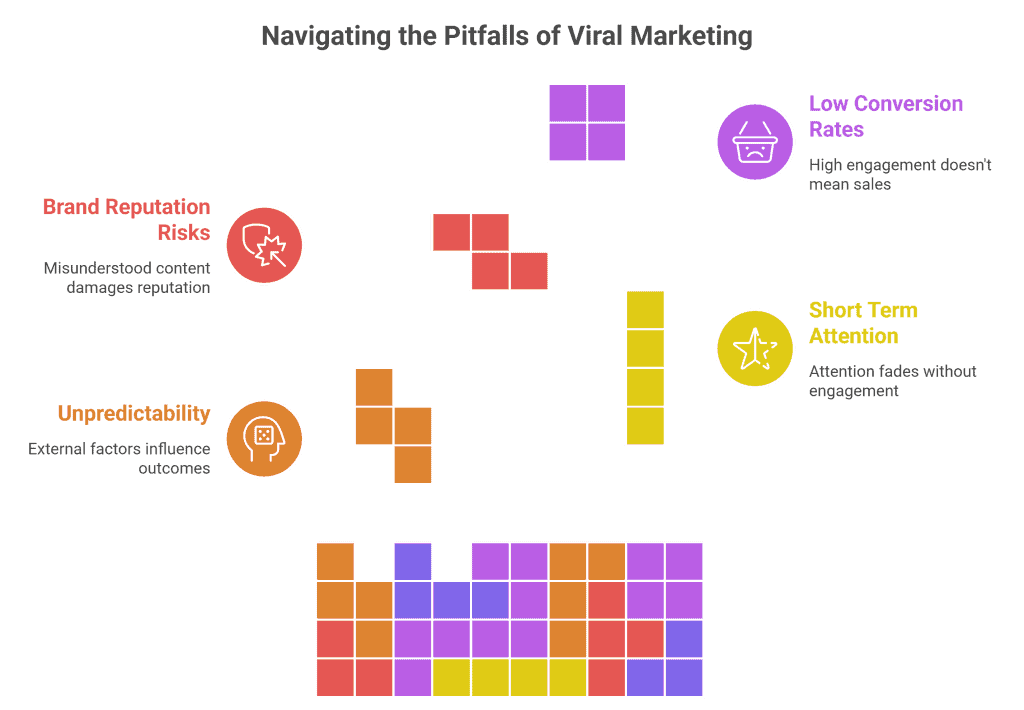
Viral success cannot be guaranteed. External factors such as timing, platform algorithms, and audience behaviour influence outcomes. Businesses must be prepared for varying levels of performance.
Short Term Attention vs Long Term Value
Viral campaigns often generate short-term spikes in attention. Without a strategy to maintain engagement, this attention can fade quickly. Long-term value requires consistent follow-up and audience nurturing.
Brand Reputation Risks
Content that is misunderstood or controversial can damage brand reputation. Businesses must carefully consider how their messaging aligns with their values and audience expectations.
Low Conversion Rates Without Strategy
High engagement does not automatically translate into sales. Businesses that fail to plan conversion pathways often experience low returns despite strong visibility.
Common Viral Marketing Mistakes SMEs Must Avoid
Chasing Virality Without Strategy
Many businesses focus on creating viral content without defining clear objectives. This approach often leads to wasted effort and limited commercial impact.
Ignoring Target Audience Needs
Content that does not resonate with the intended audience is unlikely to perform well. Understanding audience behaviour and preferences is essential for success.
No Clear Conversion Path
Failing to guide users towards action reduces the effectiveness of viral campaigns. Businesses must design clear and accessible pathways for conversion.
Overlooking Data and Performance Tracking
Without tracking performance, businesses cannot assess the effectiveness of their campaigns. Data analysis provides insights that support informed decision-making.
Inconsistent Branding and Messaging
Inconsistent messaging can confuse audiences and weaken brand identity. Maintaining a clear and consistent brand voice is essential for building trust.
Best Practices for Creating Effective Viral Marketing Campaigns
Start with a Clear Strategic Foundation
A structured approach begins with defining the target audience, positioning, and objectives. This foundation supports all subsequent decisions and activities.
Focus on Shareability and Simplicity
Content should be easy to understand and share. Simplicity increases the likelihood of engagement and distribution.
Optimise for Each Platform
Different platforms require different approaches. Tailoring content to each platform improves performance and engagement.
Leverage Data and Insights
Businesses should use analytics tools to understand audience behaviour and campaign performance.
Test, Learn, and Refine
Continuous improvement is essential for achieving better results. Testing different approaches allows businesses to identify what works and refine their strategies.
Tools and Channels That Support Viral Marketing Success
Social Media Platforms
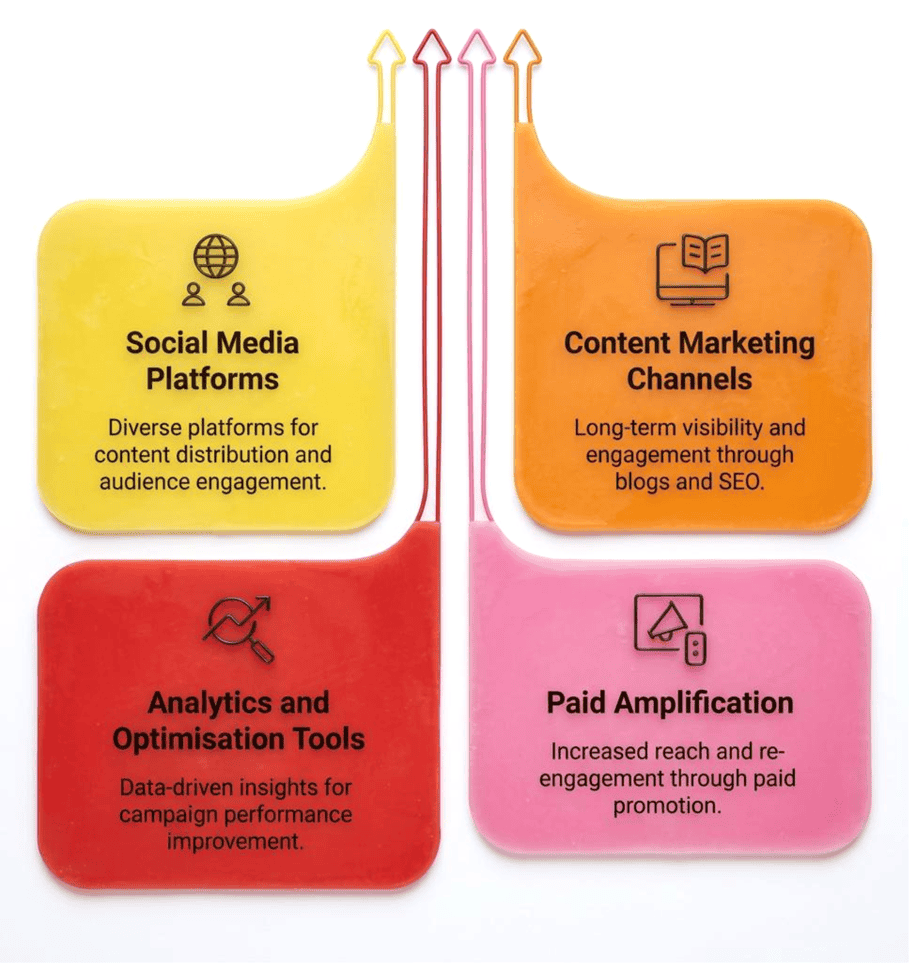
Platforms such as LinkedIn, TikTok, Instagram, and YouTube provide opportunities for content distribution and engagement. Each platform offers unique advantages depending on the target audience and content type.
Content Marketing Channels
Blogs, email marketing, and search engine optimisation support long-term visibility and engagement. These channels complement viral campaigns by providing ongoing value.
Analytics and Optimisation Tools
Tools such as Google Analytics and Search Console provide insights into user behaviour and campaign performance. These insights support data-driven decision-making.
Paid Amplification
Paid promotion can increase the reach of high-performing content. Retargeting campaigns help re-engage users who have interacted with the content.
Viral Marketing as a Strategic Growth Tool
Viral marketing offers significant opportunities for businesses to achieve rapid visibility and engagement. Despite this potential, success depends on a structured and strategic approach that aligns content with business objectives and audience needs.
Attention represents only the first step. Businesses must focus on converting that attention into measurable outcomes through clear pathways, effective messaging, and ongoing engagement. A strategy-first mindset, supported by data and continuous optimisation, provides the foundation for sustainable growth.
Organisations that approach viral marketing with clarity, discipline, and commercial focus are far more likely to achieve meaningful results. Those that rely on chance or short-term thinking often struggle to translate visibility into revenue.
Work With Opportunity Marketing
Turning viral attention into measurable revenue requires more than creative ideas. It demands a clear, structured marketing strategy that aligns your audience, positioning, messaging, and conversion pathways with your business objectives. Many SMEs generate visibility but struggle to translate that interest into consistent leads, sales, and long-term growth due to a lack of strategic direction.
Opportunity Marketing helps business owners, directors, and marketing professionals take control of their marketing through a strategy-first approach. Our consultancy services focus on building ROI-driven marketing strategies that remove guesswork, reduce wasted spend, and provide a clear roadmap for sustainable business growth. Every recommendation is based on research, analysis, and proven methodologies, helping you make informed decisions that deliver measurable results.
If your business is generating attention but not seeing the commercial return, or if you are unsure how to structure your marketing effectively, we can help. Whether you need a Fast Track Marketing Plan, outsourced marketing support, or ongoing marketing mentoring, we provide the clarity, structure, and accountability required to move your marketing from activity to performance.
For those looking to develop their own strategic marketing capability, our Strategic Marketing Mastery course offers a step-by-step framework to build a marketing strategy that drives real business outcomes. It is designed to help you think like an experienced marketer, make better decisions, and create a marketing system that consistently delivers results.
Take the next step towards turning your marketing into a powerful driver of growth. To learn more or get in touch to discuss how we can support your business.
📍 Visit:opportunitymarketing.co.uk
📞 Call: 0333 320 4108
📧 Email: info@opportunitymarketing.co.uk


Ian Kirk
Founder at Opportunity Marketing
Ian is the founder of Opportunity Marketing marketing, with over 18 years of experience in successfully setting up marketing departments, creating marketing strategies and implementing these strategies across a wide number of SME companies in both the B2B and B2C sectors through a variety of channels.

A-Z OF MARKETING
A complete guide that simplifies the wonderful world of marketing.
 Download Now