 Skip to main content
Skip to footer
Skip to main content
Skip to footer

Marketing Strategy
SME Guide to Profitable Growth with Strategic Marketing Mastery

Strategic Marketing Mastery: A Practical Course for Start-Ups and SMEs
Start-ups and small to medium-sized enterprises (SMEs) face significant challenges when it comes to marketing. Many owners find themselves experimenting with a variety of tactics, such as social media campaigns, networking, or advertising, only to discover that results are inconsistent and difficult to track. Without a clear understanding of what actually drives growth, marketing frequently feels like a guessing game. This leads to frustration, wasted resources, and missed opportunities.
The root cause of these problems is a lack of a structured marketing strategy. Without a well-defined plan, businesses fall into the trap of chasing trends or reacting to short-term issues rather than making long-term decisions that lead to profitability. The Strategic Marketing Mastery course has been created to address this exact challenge. It is a comprehensive course that guides start-ups and SMEs through the process of building a robust, actionable marketing strategy.
The Strategic Marketing Mastery course from Opportunity Marketing gives start-ups and SMEs the clarity and structure they need to take control of their marketing and drive profitable growth. Through ten comprehensive modules, business owners and junior marketers learn how to define their vision, understand their audience, position their brand, and create actionable marketing plans supported by practical tools and templates. The course equips participants with the confidence to make informed decisions, reduce wasted spending, and build sustainable strategies that deliver measurable results. Contact Us: 0333 320 4108 or email us: info@opportunitymarketing.co.uk.
Why Marketing Strategy Matters for Start-Ups and SMEs
The difference between strategy and tactics
One of the most common mistakes SMEs make is confusing tactics with strategy. Tactics are the individual actions, such as running a Google Ads campaign, sending an email newsletter, or posting on LinkedIn. Strategy, however, is the overall plan that determines your target audience, goals, brand positioning, and resource allocation.
Without strategy, tactics lack direction. A business may run multiple campaigns, but they will rarely align with business objectives, meaning results remain inconsistent. With a clear strategy in place, tactics become purposeful and work together to achieve measurable goals.
The cost of reactive marketing
Reactive marketing is when decisions are made on the fly, often in response to competitors, customers, or market trends. While this may occasionally produce short-term wins, it usually leads to poor allocation of resources. Money is wasted on activities that appear attractive in the moment but fail to generate sustainable returns. For example, spending heavily on social media advertising without understanding your audience or proposition can quickly drain budgets with little long-term value.

The benefits of a structured approach
A structured marketing strategy gives SMEs clarity, control, and confidence. It helps business owners understand their audience, position themselves effectively in the marketplace, and allocate resources efficiently. The outcome is consistent sales, stronger customer retention, and improved profitability. For start-ups, this means avoiding costly mistakes in the early years of trading. For established SMEs, this entails taking charge of their growth and lessening their reliance on experimental marketing strategies.
Who the Strategic Marketing Mastery Course is For
The Strategic Marketing Mastery course has been designed with specific audiences in mind. Its content speaks directly to those who lack experience in marketing strategy but need to develop practical skills to grow their businesses.
Start-up business owners
Entrepreneurs in their first 18 months of trading often lack the marketing expertise required to build a profitable business model. They are managing various responsibilities, ranging from sales to finance, with marketing being a secondary focus. This course provides a step-by-step structure to help them define their vision, build their customer base, and scale effectively.
SME owners struggling with marketing clarity
Many SME owners are not marketers by trade. They may be skilled in professional services, manufacturing, or technology, but when it comes to marketing, they rely on guesswork. The course offers clarity and removes the confusion by providing a practical framework that they can apply directly to their own business.
Junior marketers and accidental marketers
It is common for SMEs to assign marketing responsibilities to staff members with little or no prior experience. These accidental marketers may be office managers, assistants, or graduates who suddenly find themselves responsible for marketing activity. Strategic Marketing Mastery equips them with structured knowledge and practical tools to carry out their role effectively, benefiting both them and their employers.
Who it is not for
This course is not aimed at experienced marketing directors or professionals with advanced strategic knowledge. Nor is it suitable for those with no time to commit to completing the modules. It requires participants to be motivated, open-minded, and committed to applying what they learn.
The Opportunity Marketing Approach
A strategy-first philosophy
Opportunity Marketing has always operated with a strategy-first mindset. Rather than selling tactical services such as SEO, social media management, or advertising in isolation, the consultancy focuses on building strong strategic foundations first. This avoids wasted spending and guarantees that every marketing decision is linked to business objectives.

Independence and impartiality
Because Opportunity Marketing does not profit from selling executional services, its advice remains impartial. Recommendations are based entirely on what is best for the client, not on selling additional services. This independence gives SMEs confidence that the advice they receive is objective and designed to deliver results.
ROI-driven, process-led, and transparent
The consultancy’s work is rooted in measurable outcomes. We create every strategy with return on investment in mind, ensuring that people view marketing as a driver of business growth rather than a cost. The process is transparent, with clear steps, documented methodologies, and structured guidance.
Core values that underpin delivery
The course is built on Opportunity Marketing’s values of integrity, trust, and commercial focus. Every recommendation is data-driven and practical, avoiding jargon or unnecessary complexity. For SMEs, this means receiving clarity and actionable guidance that can be implemented without confusion.
Course Overview: What Strategic Marketing Mastery Offers
Strategic Marketing Mastery is a ten-module online course designed to teach marketing novices how to think strategically. It covers all the fundamental building blocks of marketing strategy and provides practical exercises, templates, and a workbook to apply learning directly to your business.
Unlike short or trend-driven courses, it focuses on timeless principles that remain relevant regardless of industry. Each module builds on the previous one, helping participants shape a complete strategy by the end of the programme.
Delivery is online and pre-recorded, meaning participants can work at their own pace. It is recommended that each module be completed weekly, allowing enough time for reflection and application. With 12 months of access, businesses can revisit content as often as they need.
Breaking Down the Modules in Detail
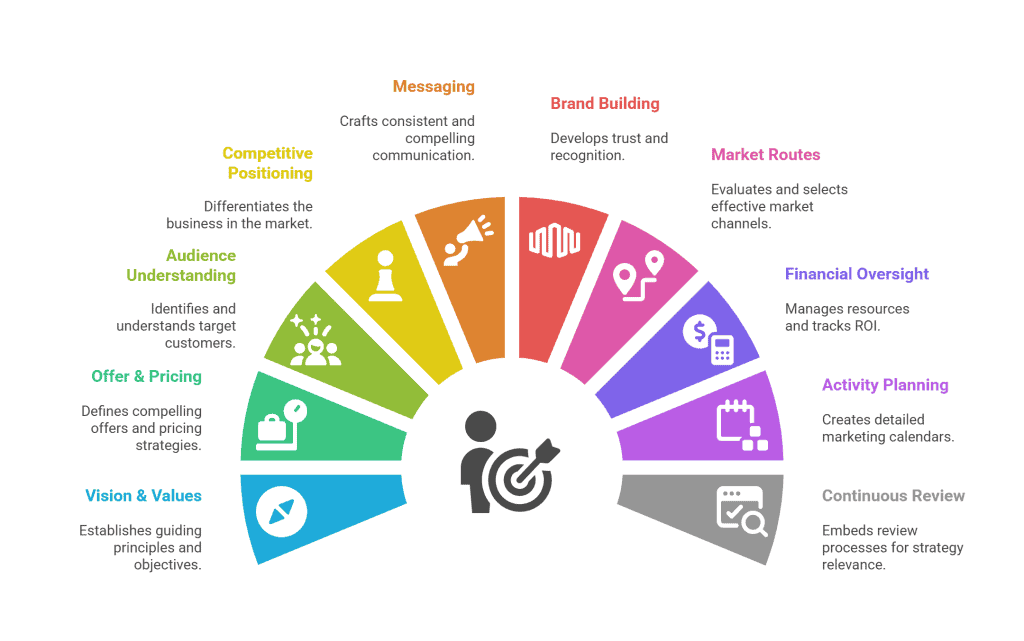
Module 1: Vision, Values, Objectives and Goals
Defining vision and values is the starting point of any strategy. Without knowing why your business exists and what it stands for, it is impossible to communicate effectively with customers. This module helps businesses establish their guiding principles and translate them into clear, measurable objectives.
Module 2: Offer and Pricing
Every successful business combines a compelling offer with a value-based pricing strategy. This module explains how to design offers that resonate with customers and how to set pricing structures that drive profitability. We explore examples of pricing models, such as subscription or tiered pricing, with pros and cons for SMEs.
Module 3: Audience
Understanding your audience is central to effective marketing. This module walks participants through identifying their ideal customer, building personas, and understanding buying behaviours. It highlights the risks of targeting too broadly and the benefits of focusing resources on clearly defined segments.
Module 4: Competitive Positioning
Markets are crowded, and without a unique selling proposition, businesses risk blending into the background. This module shows how to analyse competitors, identify gaps, and position yourself as distinct. SMEs learn how to articulate their value proposition in ways that appeal directly to customer needs.
Module 5: Messaging
Messaging is the foundation of communication. This module teaches participants how to craft consistent and compelling messages that resonate with their target audience. It addresses both brand-level messaging and tactical messaging for campaigns.
Module 6: Brand
A strong brand builds trust and recognition. This module explores what makes a brand more than just a logo, focusing on tone of voice, visual identity, and customer experience. SMEs are guided on how to align their brand with their values and customer expectations.
Module 7: Routes to Market
Businesses have countless options when it comes to reaching their audience. From digital platforms to networking and partnerships, this module explains how to evaluate different routes to market and select those that are most effective for your audience and budget.
Module 8: Financials
Marketing without financial oversight leads to wasted budgets. This module covers how to allocate resources, set budgets, and track return on investment. It provides practical tools for SMEs to make sure every pound spent contributes to growth.
Module 9: Activity Planning
Strategy must translate into action. This module helps businesses create detailed marketing calendars, prioritise activities, and monitor progress. It highlights how to balance short-term tactics with long-term objectives.
Module 10: Continuous Review
Markets evolve, customer needs shift, and competitors adapt. This module explains how to embed review processes into your business so that strategy remains relevant. SMEs learn how to track progress, identify gaps, and refine their approach continuously.
Practical Benefits of the Course for Businesses
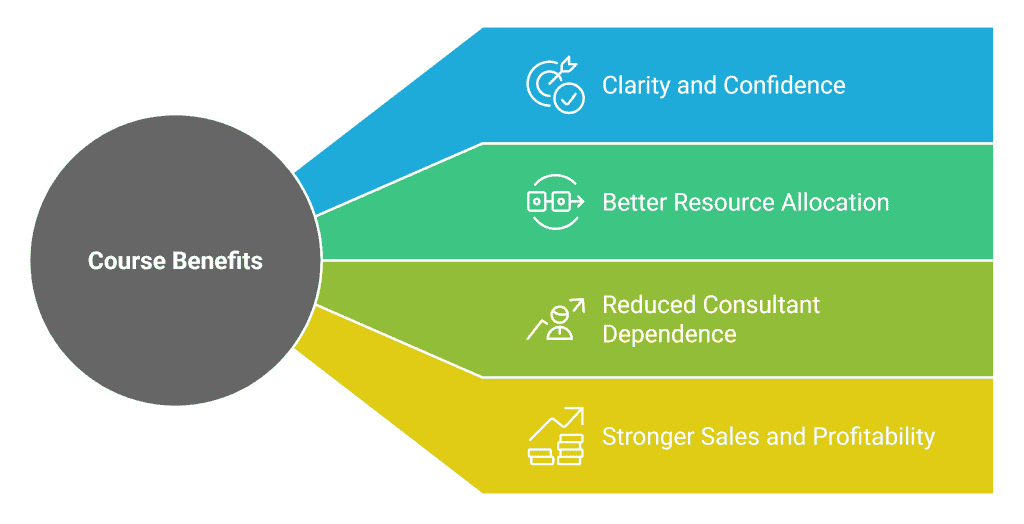
Clarity and confidence
Participants gain clarity over their marketing direction and confidence in making decisions. No more guessing which tactic might work – every activity is grounded in strategy.
Better resource allocation
Time and money are spent on activities that support business goals rather than wasted on random experiments. This is particularly important for SMEs with limited budgets.
Reduced dependence on external consultants
Businesses gain the knowledge to make informed decisions without always relying on external consultants or agencies. This saves money and builds internal capability.
Stronger sales and profitability
With a clear strategy in place, SMEs are more likely to achieve consistent sales, retain customers, and improve profitability. The course provides a foundation for long-term growth.