 Skip to main content
Skip to footer
Skip to main content
Skip to footer

Become a Marketing Consultant
Step-by-Step Guide to Starting a Successful Marketing Consultancy

Your Roadmap to Launching a Profitable Marketing Consultancy Business
Starting a marketing consultancy business can be one of the most rewarding decisions for experienced marketing professionals looking to take control of their careers. It combines independence, flexibility, and the satisfaction of helping businesses grow through strategic and measurable marketing practices. Yet, while the rewards are high, success requires careful planning, strategic positioning, and a clear understanding of both the consultancy model and what clients truly need.
The Becoming a Marketing Consultant course from Opportunity Marketing provides experienced marketing professionals with a proven, structured framework to start and grow their own successful consultancy business. Through ten comprehensive modules, it guides learners step-by-step on how to define their niche, attract clients, develop effective strategies, and build a sustainable income. Combining practical tools, templates, and mentoring support, the course helps professionals transition confidently from employment to self-employment while avoiding common start-up pitfalls. Contact Us: 0333 320 4108 or info@opportunitymarketing.co.uk.
Understanding the Marketing Consultancy Business
A marketing consulting business helps other organisations identify, plan, and execute effective marketing strategies that deliver a positive return on investment. Rather than focusing on executing isolated marketing activities, such as social media or paid advertising, consultants act as strategic partners who guide clients towards clarity, focus, and measurable outcomes.
Marketing consultants bridge the gap between business objectives and marketing execution. Their primary role is to evaluate a client’s current marketing efforts, identify weaknesses or missed opportunities, and create a structured marketing strategy that aligns with business goals. Unlike agencies that may focus on selling creative or tactical services, consultants provide impartial, evidence-based advice and direction.
A successful consultancy business focuses on strategy first, execution second. This approach positions the consultant as a trusted advisor rather than a service vendor. As a consultant, your aim is to help clients understand which marketing activities will generate sustainable business growth and which are wasting valuable resources.
Why Becoming a Marketing Consultant is a Smart Career Move
For experienced marketing professionals, starting a consultancy business offers freedom, flexibility, and control over their professional lives. Many marketing managers or directors reach a stage in their careers where corporate constraints limit their creativity or ability to influence decisions. Consulting offers a way to apply expertise independently and build something personally meaningful.
Self-employment also provides the potential for higher earnings and greater flexibility in lifestyle. You choose your collaborators, schedule, and preferred projects. Working for yourself also allows you to choose clients whose businesses align with your values, creating more fulfilling working relationships.
On a practical level, marketing consultancy is a business that can start with relatively low overheads. A computer, professional insurance, and marketing tools can be enough to begin, making it a viable option for professionals seeking independence without heavy start-up costs. Yet success depends on building credibility, defining a clear niche, and following a structured plan, all of which this guide will explain in detail.

Assessing Your Readiness to Go Solo
Before launching a consultancy, it’s important to confirm that your skills, experience, and mindset align with the realities of self-employment. Consulting requires more than marketing knowledge; it involves business acumen, client relationship management, and the ability to deliver consistent value.
Evaluating Skills and Experience
A successful consultant typically has several years of marketing management or senior-level experience. You should have a strong grasp of marketing strategy, campaign management, budgeting, and analytics. Just as importantly, you should understand how marketing contributes to broader business performance, including revenue growth and customer retention.
If your background includes managing marketing teams, advising leadership, or delivering measurable results in past roles, you likely have the foundation needed. The more practical experience you can draw upon, the more confidence clients will have in your expertise.

Mindset and Motivation
Transitioning from employee to business owner requires a shift in mindset. You need to embrace uncertainty, exercise self-motivation, and assume multiple roles, ranging from strategist and salesperson to administrator and accountant. Determination and persistence are key qualities. Those who thrive in consultancy are often natural problem-solvers who enjoy variety and continuous learning.
Personal Circumstances
Consider your financial situation, personal commitments, and risk tolerance. Building a new consultancy may take months before generating consistent income, so having a financial cushion or part-time work during the early stages can provide stability.
Planning Your Business for Success
Launching a consultancy without a clear plan can lead to frustration, missed opportunities, and financial strain. A solid business plan acts as your roadmap, guiding every decision and helping you stay focused on your objectives.
Setting Objectives and Vision
Start by defining what success means to you. Are you aiming for independence, a certain income level, or the flexibility to work fewer hours? Having a clear vision helps you structure your consultancy accordingly. Set measurable objectives such as “achieve five retained clients within six months” or “generate a minimum monthly turnover by the end of year one.”
Choosing a Business Model
Marketing consultants can operate in several ways. A solo consultant works independently with clients, offering personal and direct service. Partnerships can combine complementary expertise, while an associate model allows consultants to collaborate under a shared brand.
Each model has its benefits. Solo work offers full control but may limit capacity. Partnerships spread workload but require shared decision-making. Joining a network, such as Opportunity Marketing’s Associate Program, combines independence with the credibility of an established brand and structured support.
Developing a Business Plan
Your plan should include:
- Target Market: Define your ideal clients, SMEs, start-ups, or specific sectors like technology or professional services.
- Services Offered: Outline your core offerings, such as strategic marketing planning, mentoring, or marketing audits.
- Pricing Structure: Detail how you’ll charge for your time, retainer, project, or day rate.
- Financial Forecasts: Estimate start-up costs, recurring expenses, and projected revenue.
- Marketing Strategy: Plan how you’ll attract clients through networking, content marketing, or referrals.

A written plan helps clarify your direction and makes it easier to review progress as your business grows.
Legal, Financial, and Administrative Setup
Setting up your consultancy correctly from the start will save time, money, and stress later. Each step helps create a professional foundation for growth and client confidence.
Legal Structure
Choose whether to operate as a sole trader, partnership, or limited company. A limited company offers liability protection and potential tax advantages, but it also involves more administrative work. Register your business name with Companies House and confirm domain availability to maintain consistency across your online presence.
Licences, Insurance, and Compliance
Professional indemnity insurance protects against claims of negligence, while public liability insurance covers incidents involving third parties. Data protection compliance is also critical under the UK GDPR regulations. Consultants handling client data should register with the Information Commissioner’s Office (ICO) and follow strict data security practices.
Financial Management
Set up a dedicated business bank account and use accounting software such as Xero or QuickBooks to track income and expenses. Register for VAT if your turnover exceeds the UK threshold and keep accurate financial records for tax returns. Using an accountant can save significant time and reduce errors.
Contracts and Terms
Create clear client contracts covering project scope, payment terms, confidentiality, and intellectual property rights. These documents protect both parties and establish professionalism from the outset.
Defining Your Niche and Consultancy Offering

Identifying a clear niche helps you stand out in a crowded market. Rather than being a generalist who offers “all things marketing”, define a specific area of expertise that aligns with your experience and client needs.
Choosing a Niche
Your niche could be based on industry (for example, technology, hospitality, or manufacturing), business size (SMEs or start-ups), or service focus (strategic planning, marketing audits, or mentoring). A narrow focus makes it easier to target specific audiences and communicate value.
Designing Your Services
Consultancies commonly offer:
- Marketing Strategy Development: Crafting bespoke strategies that align with client objectives.
- Marketing Health Check Audits: Reviewing existing efforts to identify strengths, weaknesses, and opportunities.
- Mentoring and Training: Guiding junior marketers or business owners through marketing principles.
- Outsourced Marketing Support: Managing marketing activities for clients lacking internal teams.
Each service should be clearly defined, outcome-driven, and priced according to the value delivered rather than the time spent.
Positioning Your Offering
Position yourself as a problem-solver who helps clients make smarter marketing decisions. Highlight the measurable benefits you provide, such as improved ROI, clearer strategy, or better alignment between marketing and business goals.
Building a Strong Brand and Identity

Your brand is more than a logo or colour scheme; it’s your reputation, credibility, and commitment to clients. A strong brand communicates expertise, trust, and professionalism.
Defining Your Brand Values
Start by articulating what your consultancy stands for. Integrity, transparency, and strategic clarity are core values that clients associate with reputable consultants. Consistency across all materials, from your website to proposals, reinforces your professionalism.
Creating a Brand Identity
Invest in a professional logo, website, and marketing collateral. Choose colours, fonts, and imagery that reflect your consultant’s personality. Consistent visual identity builds recognition and trust.
Crafting Your Messaging
Develop key messages that articulate who you help, what problems you solve, and what outcomes you deliver. Avoid jargon and communicate in simple, confident language. Your tagline or mission statement should summarise your value proposition in one line, such as, “Helping SMEs achieve measurable growth through strategic marketing.”
Marketing Yourself and Attracting Clients
Attracting clients is the lifeblood of any consultancy business. The most successful consultants build trust through visibility, expertise, and consistent value.
Creating Awareness
Start with your immediate network. Let former colleagues, suppliers, and business connections know you are launching a consultancy. Attend industry events, webinars, and networking meetings. Establish a strong LinkedIn presence with regular thought-leadership posts and updates.

Building an Online Presence
Your website should showcase your expertise, services, testimonials, and case studies. Include a blog section where you share marketing insights and advice. Regularly updated, high-quality content demonstrates your knowledge and helps improve SEO.
Lead Generation Techniques
Create downloadable resources like marketing templates, guides, or checklists that encourage visitors to share contact details. Use email marketing to nurture these leads with valuable insights and invitations to consultations.
Running webinars or short online workshops is another effective strategy for positioning yourself as a trusted expert while generating qualified leads.
Sales and Conversion
When a potential client shows interest, focus on understanding their challenges before pitching solutions. Ask detailed questions about their business objectives and marketing pain points. Present proposals that outline deliverables, timelines, and measurable outcomes. Confidence, clarity, and professionalism will significantly increase your conversion rate.
Delivering Value and Managing Client Relationships
Winning clients is only half the battle; keeping them satisfied and achieving results defines long-term success.
Creating a Structured Delivery Process
A clear and repeatable process helps you deliver consistent results. Begin with discovery meetings to understand the client’s goals and challenges. Follow with research and strategy development, then oversee execution or guide their team.
Document each stage using templates and frameworks to maintain quality and efficiency. Clients appreciate a structured approach, as it demonstrates professionalism and transparency.
Communication and Reporting
Maintain open, regular communication. Provide progress updates, reports, and review sessions to discuss performance. Transparency builds trust and reinforces your credibility.

Building Long-Term Partnerships
Satisfied clients often become repeat customers or refer others. Offer ongoing support options such as quarterly marketing reviews, mentoring sessions, or outsourced management packages. Loyalty stems from consistent value and measurable outcomes.
Maintaining Momentum and Scaling Your Consultancy
Once you establish your consultancy, the next challenge is to maintain momentum. Growth requires focus, discipline, and continuous marketing for your business.
Time Management and Productivity
Establish daily and weekly routines to balance client work with business development. Use project management tools to monitor progress and deadlines. Set time aside for marketing your consultancy, even during busy periods.
Expanding Capacity
When demand grows, consider scaling by outsourcing non-core tasks such as bookkeeping, administration, or content writing. Partnering with other consultants can help you take on larger projects without compromising quality.
Joining an Associate Network
Aligning with a reputable consultancy network, such as Opportunity Marketing, can provide additional credibility, mentoring, and referral opportunities. This approach combines the independence of self-employment with the security of an established brand and structured support.
Common Pitfalls to Avoid
Many new consultants face similar challenges during their first year. Awareness of these pitfalls can help you avoid unnecessary setbacks.
- Lack of Focus: Trying to serve every type of business dilutes your value proposition. Specialisation builds authority.
- Underpricing: Low fees may attract clients initially but undermine your profitability and perceived value.
- Weak Contracts: Vague agreements lead to disputes. Always document project details.
- Neglecting Self-Marketing: Consultants often prioritise client work and forget to promote their own business. Consistent visibility is vital.
- Failure to Manage Cash Flow: Irregular income requires careful budgeting and reserves for slower months.

Proactive planning and consistent professionalism prevent many of these issues.
Continuous Professional Development
Marketing evolves constantly, and successful consultants never stop learning. Staying updated with trends, technology, and tools keeps your consultancy relevant and competitive.
Join professional networks such as the Chartered Institute of Marketing (CIM) or attend workshops on digital strategy, analytics, and client management. Consider enrolling in advanced courses like Opportunity Marketing’s online programs, which include templates, proven processes, and mentoring to enhance your consultancy skills.
Lifelong learning reinforces credibility, expands your expertise, and supports long-term success.
Case Study: From Corporate Marketer to Independent Consultant
Consider the example of a mid-career marketing manager who transitioned from corporate employment to independent consulting. After completing a structured training program with Opportunity Marketing, they defined their niche by helping professional service firms refine their marketing strategies.
They developed a business plan, identified their ideal clients, built a website, and implemented a sales process by applying a proven 10-module framework. Within six months, they had secured three retained clients, replaced their corporate salary, and gained full control over their schedule. This outcome illustrates how structure and strategic preparation transform ambition into sustainable success.
Tools, Templates, and Resources for New Consultants
Modern technology simplifies many aspects of consultancy management. Recommended tools include:
- Project Management: Trello, Asana, or Monday.com for tracking tasks and deadlines.
- CRM Systems: HubSpot or Pipedrive for managing client relationships.
- Analytics: Google Analytics, SEMrush, and Google Search Console for marketing insights.
- Financial Tools: QuickBooks or FreeAgent for invoicing and expense tracking.
- Marketing Platforms: LinkedIn, Mailchimp, and Canva for content and communication.
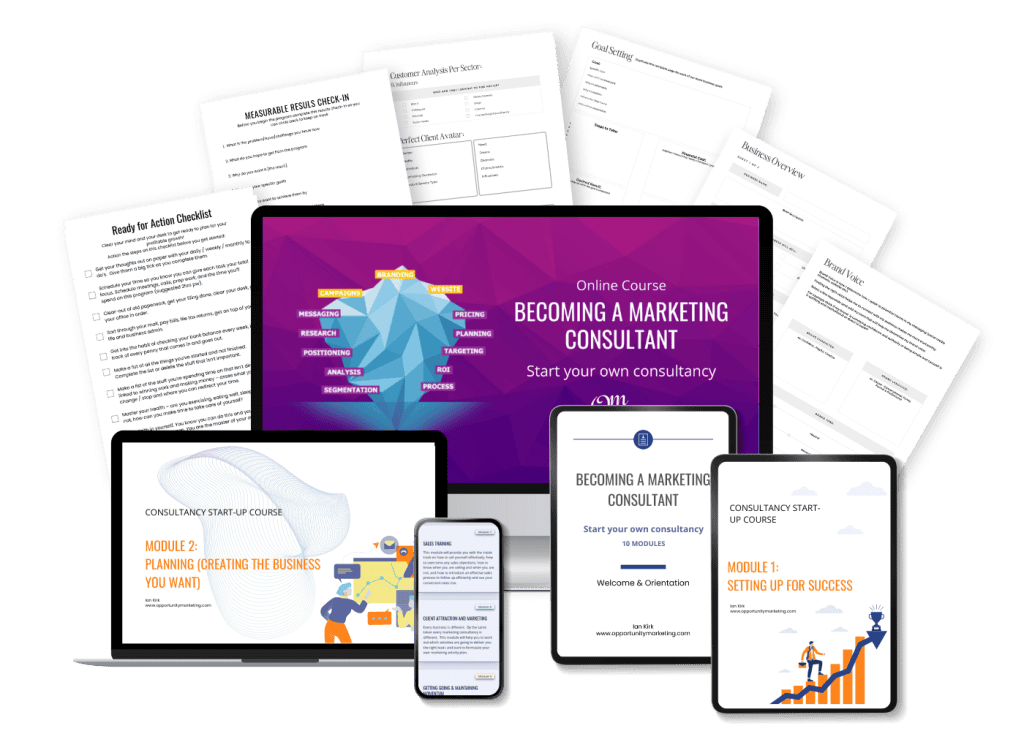
Opportunity Marketing’s Become a Marketing Consultant course includes ready-made templates, proposal frameworks, and client management tools, saving hours of setup time and improving professionalism from day one.
Building a Sustainable and Rewarding Career
Success in consultancy depends on balancing strategy, service quality, and business acumen. The most successful consultants prioritise client value, build strong relationships, and continually refine their approaches.
Becoming a marketing consultant is not simply a career change; it is the creation of a business built around your expertise. It demands confidence, persistence, and continuous improvement. Yet the rewards – independence, flexibility, and the satisfaction of helping businesses flourish – are well worth the effort.
Take the Next Step with Opportunity Marketing
Opportunity Marketing’s Become a Marketing Consultant course provides everything you need to start and grow your consultancy successfully. The 10-module online course covers all aspects of setup and operation, from defining your proposition and pricing to attracting clients and managing delivery. It includes proven templates, tools, and methodologies used by experienced consultants across the UK.
Participants can also apply to the OM Associate Program for additional mentoring, client referrals, and post-course support. This option provides structured guidance through your crucial first months, giving you the best chance of building a profitable, sustainable business.

To start your consultancy with clarity, structure, and confidence, visit Opportunity Marketing and take your first step toward becoming a successful marketing consultant today.
Work With Opportunity Marketing
Opportunity Marketing specialises in helping experienced marketers and ambitious professionals turn their expertise into thriving consulting businesses. Our Becoming a Marketing Consultant course gives you the structure, strategy, and confidence to take control of your career, while our wider consultancy services support business owners and SMEs in achieving sustainable, ROI-driven growth. Whether you want to start your own consultancy, refine your marketing strategy, or gain expert guidance to maximise business performance, we’re here to help you every step of the way.
Request a Free Consultation
Let’s talk about how we can help you stop reacting to agency ideas and start driving your marketing with purpose. Complete our quick inquiry form or give us a call; we’ll walk you through what’s possible and how to get started.
Call: 0333 320 4108
Email: info@opportunitymarketing.co.uk


Ian Kirk
Founder at Opportunity Marketing
Ian is the founder of Opportunity Marketing marketing, with over 18 years of experience in successfully setting up marketing departments, creating marketing strategies and implementing these strategies across a wide number of SME companies in both the B2B and B2C sectors through a variety of channels.

A-Z OF MARKETING
A complete guide that simplifies the wonderful world of marketing.
 Download Now


