Skip to main content
Skip to footer
Skip to main content
Skip to footer

How To:, Marketing Strategy, Marketing Techniques
The Hidden Profit in Customer Lifetime Value

Most businesses are far too harsh when judging their marketing.
A campaign goes live, leads come in, a handful convert, and the immediate question is whether the numbers stack up right now. Did the enquiry cost too much? Was the return strong enough? Should we keep going or pull the plug?
On the surface, that sounds commercially sensible. In reality, it can be surprisingly short-sighted.
The problem is that many businesses assess marketing based only on the first transaction. They look at what a customer bought today and ignore what that customer may be worth over the next one, three, or even five years. That is where perfectly sound marketing decisions often get mistaken for expensive ones.
This is exactly why Customer Lifetime Profit Value matters.
The first sale is rarely the full story
In many sectors, the first sale is not where the real value sits. It may be the entry point, not the destination.
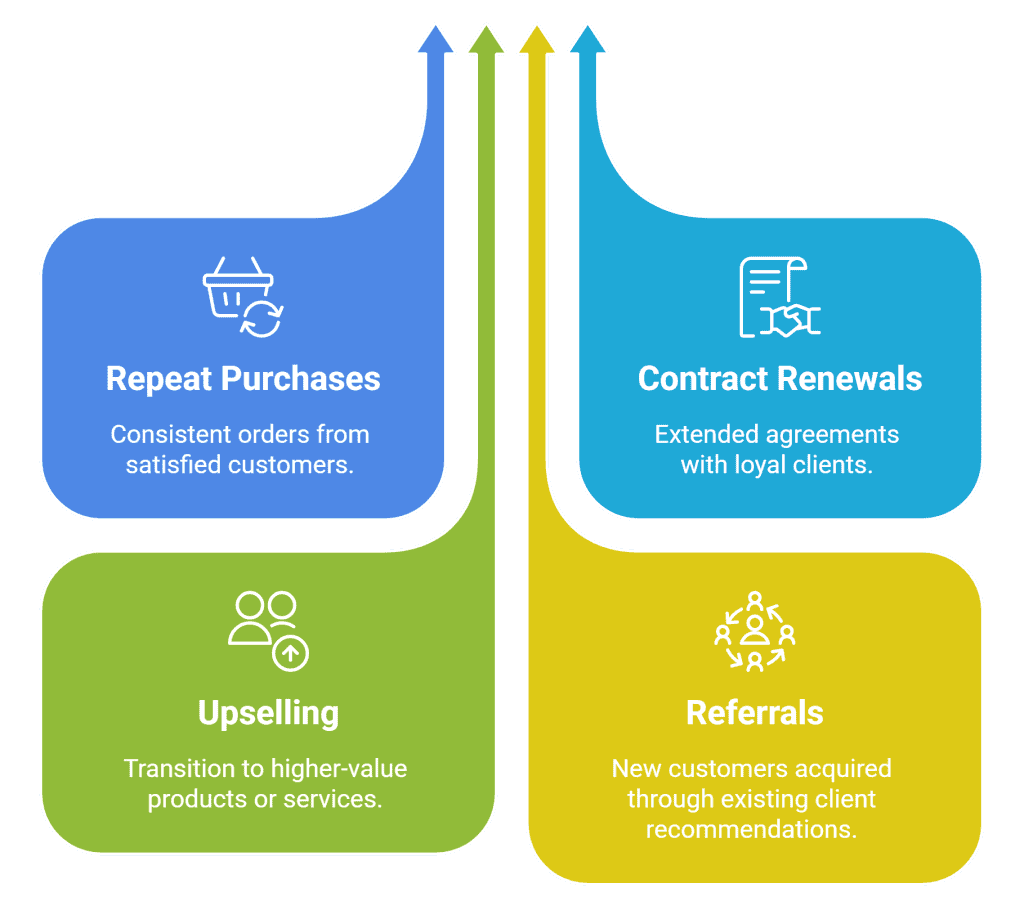
A client might start with a small project and later expand the relationship. A customer may make an initial purchase, then reorder repeatedly. A contract might renew. A buyer might move from a lower-tier offer to a higher-value one. Existing customers might refer others. Over time, the total profit generated from that relationship can be significantly greater than the value of the first invoice.
Yet plenty of SMEs still budget and judge performance as if the first transaction is all that matters.
That tends to make marketing look riskier than it really is. It can also make businesses overly cautious about acquisition costs, because they are comparing the cost of winning a customer with only the smallest visible part of that customer’s future value.
Why this changes marketing decisions
When you understand customer lifetime profit properly, your entire view of marketing becomes more intelligent.
You stop asking, “Was this lead expensive?” in isolation. Instead, you start asking, “Expensive compared to what?” Compared to a one-off sale? Or compared to a customer relationship that might generate value for years? That distinction matters a great deal.
A business that underestimates lifetime value will almost always underinvest in growth. It will cut back too early, abandon useful channels too quickly, and treat acquisition as a cost-control exercise rather than a profit-building one. By contrast, a business that understands lifetime profit can make more confident decisions about where to invest, what it can afford to spend, and where retention deserves just as much attention as lead generation.
What sits inside customer lifetime profit
The phrase itself can sound technical, but the principle is straightforward. Customer Lifetime Profit Value is shaped by a few practical levers:
Average order value
How much does the customer typically spend?
Purchase frequency
How often do they come back?
Retention period
How long do they stay with you?
Profit margin
How much of that revenue is actually left once costs are taken into account?
Expansion opportunities
Can they be upsold, cross-sold, renewed, or developed into a more valuable account?
Once you start looking at customers through those lenses, it becomes obvious that not all customers are equal, and not all marketing should be measured in the same way. Some campaigns might bring in quick wins. Others may attract customers with far higher long-term potential. If you only measure the first sale, you miss that distinction completely.
Why retention deserves more attention
There is still a strong bias in many businesses towards acquisition because it feels more dynamic. New leads look exciting. New customers look like momentum. New campaign activity creates visible movement. Retention, by comparison, can seem quieter and less glamorous.
But commercially, retention is often where the most efficient profit sits.
Keeping a customer usually costs less than acquiring a new one. Existing customers tend to trust you more, buy with less friction, and require less persuasion. They are also more likely to purchase additional services, stay longer, and recommend others if the experience is good enough.
That means retention is not a customer service issue sitting on the edge of marketing. It is one of the central drivers of marketing profitability. Businesses that ignore this usually end up trapped in a cycle of constantly replacing lost customers. They work hard to fill the top of the funnel while value quietly leaks out of the bottom.
Where SMEs often go wrong
The most common mistake is not that SMEs fail to understand the idea of loyalty. It is that they fail to connect loyalty to financial planning. They may talk about looking after customers, but they do not calculate what an extra year of retention is worth. They may say upselling is important, but they do not measure how much that improves customer value. They may want more repeat business, but they do not build systematic communication, account development or follow-up around it.
So the opportunity stays vague. Once the numbers are attached, it becomes real. If an extra year of retention meaningfully increases lifetime profit, then retention activity stops being a “nice to have”. It becomes a commercial priority.
A better question for business owners

One of the most useful shifts a business owner can make is to stop asking only, “How many new customers did marketing generate?” That matters, of course. But it is incomplete. A better question is this:
What kind of customers are we attracting, and what are they worth over time?
That question sharpens the whole strategy. It affects targeting, messaging, offers, pricing, onboarding, account management and retention planning. It also helps businesses avoid chasing volume at the expense of value.
More customers are not always better. Better customers are better.
Why this matters for Opportunity Marketing readers
This topic fits particularly well with the wider Opportunity Marketing philosophy because it pushes marketing back into commercial reality.
If marketing is supposed to be measurable, then customer value has to be measured properly too. Otherwise, businesses are making growth decisions based on incomplete evidence. They are looking at the front page of the story and pretending they have read the full book.
Customer Lifetime Profit Value encourages a more disciplined view. It reminds businesses that growth is not just about generating attention or even creating sales. It is about creating profitable customer relationships and understanding what those relationships are truly worth.
That is a much more useful basis for decision-making.
If you want your marketing decisions to be based on the real value of a customer rather than the first sale alone, The Maths Behind Marketing will help you think much more clearly about profit, retention and long-term growth.