Skip to main content
Skip to footer
Skip to main content
Skip to footer

Marketing Strategy, Marketing Tips
The Real Economics of Lead Generation
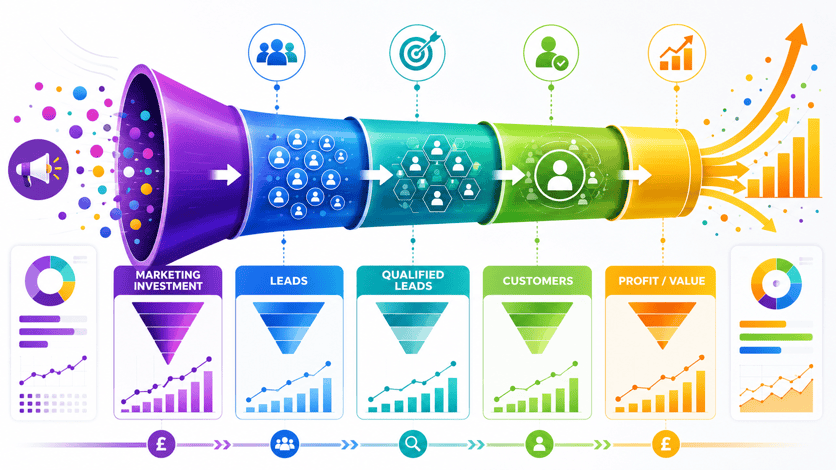
Lead generation is one of those business phrases that sounds reassuringly productive. It suggests movement – enquiries, pipeline and opportunity. It feels like something tangible is happening, which is why so many businesses become obsessed with it.
They want more leads, more traffic, more form fills, more calls, and more names in the CRM. And when results feel flat, the instinct is usually to turn the volume up, increase the spend, add another marketing campaign and push harder.
But lead generation is not really a volume game, at least not if you care about profit. It is an economics game.
More leads do not automatically mean better marketing
This is where many SMEs get caught out. A campaign can deliver a large number of leads and still be commercially poor. Whilst another can produce fewer leads yet be far more profitable. Without proper financial visibility, the first campaign often gets praised while the second is undervalued. Why? Because volume is easy to see.
A cheap lead can become an expensive customer if conversion is weak. An apparently expensive lead can become highly profitable if it converts well and turns into strong long-term value. That is why businesses need to move beyond surface-level lead counts and start looking at the economics underneath them.
The three numbers that matter most
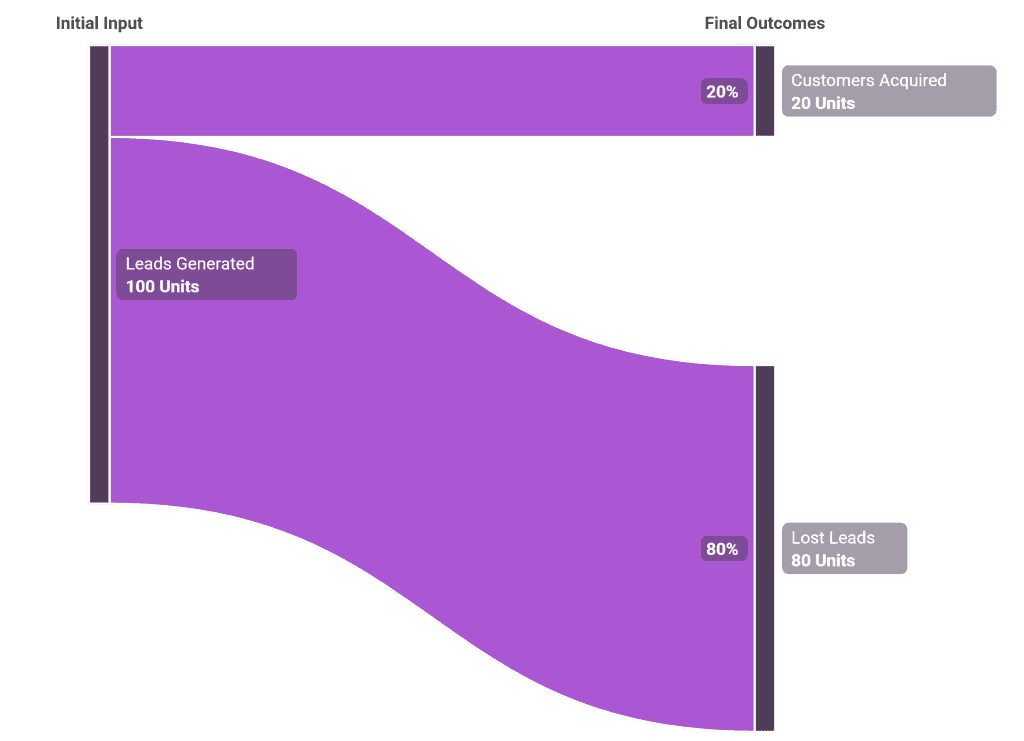
If you want a clearer picture of lead generation performance, three measures do most of the heavy lifting.
Cost per Lead (CPL)
How much does it cost to generate each lead?
Conversion Rate
What percentage of those leads turn into actual customers?
Cost per Acquisition (CPA)
Once you factor the conversion rate in, what does it really cost to win a customer?
Those figures do not just tell you whether activity is happening. They tell you whether it is commercially viable. A business that understands those numbers can forecast more accurately, compare channels more intelligently, and stop making decisions based on hope.
The trap of cheap leads
One of the most persistent myths in marketing is that lower lead cost is always better.
It isn’t, cheap leads can be poor leads. They may come from loosely targeted campaigns, weak qualification, or channels that attract attention without real intent. They look efficient on a spreadsheet until the sales team starts chasing them and getting nowhere.
Lead cost should never be looked at in isolation.
A lead source producing enquiries at £10 each may appear attractive, but if very few of those enquiries convert, the business is not really buying low-cost opportunities. It is buying distraction. Meanwhile, another channel may produce leads at £35 each but convert at a far higher rate, making it the more profitable option by some margin.
This is exactly why commercial analysis matters more than surface impressions.
Lead generation is only half the system
Another mistake businesses make is assuming the problem always sits at the top of the funnel. This is often not the case.

Leads may be coming in at a perfectly acceptable cost, but poor follow-up, unclear messaging, inconsistent qualification or weak handover into sales can destroy the economics further down the process. That means marketing gets blamed for what is actually an operational issue.
A healthy lead generation model depends on more than just the campaign.
It depends on speed of response, lead handling discipline, quality of sales conversations, clarity of offer, and alignment between what marketing promises and what sales delivers. If those pieces are disconnected, businesses can spend more and more money creating leads without ever solving the real problem.
That is why lead generation should be viewed as a system, not a tactic.
Forecasting makes marketing far more useful
The most powerful thing about understanding lead generation economics is that it turns marketing into something much more predictable.
Once a business knows its average cost per lead, conversion rate, average sale value and profit margin, it can start modelling outcomes with more confidence. Not perfectly, of course, but far more intelligently than before.
It becomes possible to answer questions such as:
- If we invest another £5,000, what level of lead volume should that produce?
- If our conversion rate improves slightly, how does that affect profitability?
- Which channels deserve more budget?
- Where are we paying for activity that looks good but does not pay back?
This is where marketing becomes much more useful to leadership teams. It stops being a stream of disconnected activity reports and starts becoming a set of commercial forecasts.
The role of channel discipline
One of the most practical applications of lead generation economics is channel comparison.

Businesses often spread spend across search, social, email, content, events, referrals and outbound activity without a reliable way of comparing what each one is actually delivering. Some channels survive because they are fashionable. Others because they are familiar. A few because nobody has ever properly challenged them. That is not strategy, that is habit.
Once channels are reviewed through CPL, CPA and conversion performance, it becomes much easier to see which ones deserve investment and which ones are simply consuming budget. Often the answers are uncomfortable. Channels that look busy may contribute very little. Channels that seem quieter may deliver the strongest commercial return.
That is precisely why measurement matters.
What better lead generation really looks like
Contrary to popular belief, improving lead generation is not always about generating more demand. Sometimes it is about using existing demand better.
It might mean improving landing pages, tightening targeting, responding faster, qualifying harder, changing the offer, clarifying messaging, or simply stopping spend in places where leads look plentiful but never convert into revenue.
These are not glamorous fixes. But they are often the most profitable ones.
Businesses that understand this tend to become calmer and smarter. They stop chasing marketing noise and start focusing on conversion mechanics. They become less interested in how much activity they can produce and more interested in what that activity is actually worth. Ultimately, that is a much healthier mindset.
Why this matters in the wider ebook journey
For readers moving through The Maths Behind Marketing, this chapter is an important turning point because it helps connect theory with commercial control.
Lead generation is one of the most visible parts of marketing, which is exactly why it needs to be understood properly. If businesses misread it, they tend to overspend, misjudge performance, and blame the wrong parts of the system. But when they understand the economics, lead generation becomes far less mysterious and far more manageable. That is the real shift: from activity to accountability.
If your business is generating leads but still lacks confidence in the numbers behind them, The Maths Behind Marketing will help you understand what those leads are really costing, and what they are actually worth.



Ian Kirk
Founder at Opportunity Marketing
Ian is the founder of Opportunity Marketing marketing, with over 18 years of experience in successfully setting up marketing departments, creating marketing strategies and implementing these strategies across a wide number of SME companies in both the B2B and B2C sectors through a variety of channels.

A-Z OF MARKETING
A complete guide that simplifies the wonderful world of marketing.
 Download Now