Skip to main content
Skip to footer
Skip to main content
Skip to footer

How To:, Marketing Strategy, Marketing Techniques, Marketing Tips, The 7 P's of Marketing
Target Markets and Customer Acquisition Strategies for UK SMEs

Finding Your Ideal Customers and Growing Your Business
Many businesses invest significant time, money, and effort into marketing activities but still struggle to generate consistent results. A common reason for this challenge is a lack of clarity around who the business is trying to reach. Marketing becomes far more effective when organisations understand exactly who their ideal customers are, what problems they face, and what influences their purchasing decisions.
Target market identification sits at the heart of every successful marketing strategy. Businesses that clearly define their audience can create more relevant messaging, select the most effective marketing channels, improve conversion rates, and achieve a stronger return on investment. Businesses that attempt to market to everyone often dilute their message and waste valuable resources on prospects who are unlikely to buy.
Customer acquisition is closely linked to target market selection.
The better a business understands its audience, the easier it becomes to attract, engage, and convert potential customers into paying clients.
A strategic approach to target markets allows organisations to move away from guesswork and towards measurable, sustainable growth.
What are target markets and customer acquisition strategies?
Target markets are the specific groups of customers most likely to purchase a product or service. Customer acquisition strategies are the marketing activities used to attract, engage, and convert those customers into paying clients. Businesses that clearly define their target market can improve marketing effectiveness, reduce wasted spending, and achieve stronger returns on investment.
The Strategic Marketing Mastery course helps business owners, directors, marketing professionals, and aspiring consultants develop the skills needed to identify profitable target markets, build effective customer acquisition strategies, and create marketing plans that deliver measurable business growth. Learners gain practical knowledge in market segmentation, customer profiling, lead generation, marketing performance measurement, and ROI-focused decision-making, helping them make more informed marketing investments. Through a structured, strategy-first approach, the course provides the frameworks and tools required to attract the right customers, improve conversion rates, and build sustainable long-term growth. Contact Us: 0333 320 4108 or info@opportunitymarketing.co.uk.
Understanding What a Target Market Is
Defining a Target Market
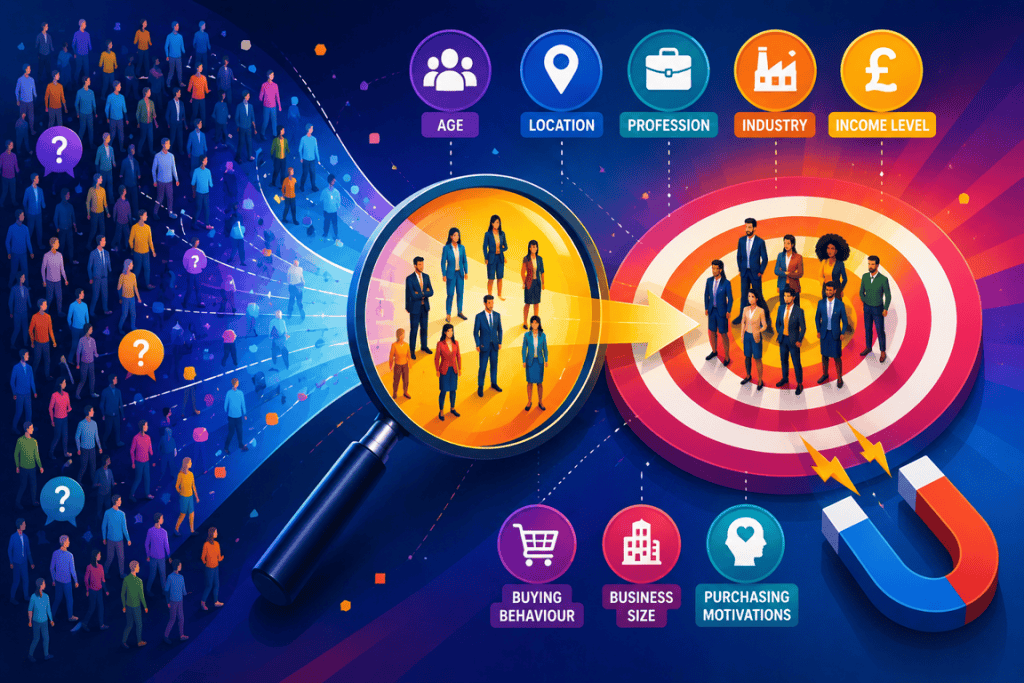
A target market is a specific group of people or organisations that are most likely to purchase a product or service. These individuals or organisations share common characteristics, needs, challenges, behaviours, or objectives that make them suitable prospects.
Target markets can be defined using a variety of factors, including age, location, profession, industry sector, income level, buying behaviour, business size, or purchasing motivations. The goal is to identify the audience most likely to benefit from what the business offers.
Marketing becomes significantly more efficient when communications are tailored to a clearly defined audience. Rather than attempting to appeal to a broad and diverse market, businesses can focus their resources on attracting higher-quality prospects.
The Difference Between a Market and a Target Market
A market refers to the wider group of potential buyers that exist within a particular sector or industry. A target market represents the specific segment of that wider market that a business chooses to focus on.
For example, a marketing consultancy may operate within the wider SME market. Its target market may be business owners and directors of service-based businesses with annual revenues between £500,000 and £10 million who require strategic marketing support.
This distinction is important because successful marketing requires focus. Resources are often limited, particularly within SMEs. Concentrating efforts on the most attractive market segments frequently produces better results than trying to serve every possible customer.
Common Mistakes Businesses Make When Identifying Target Markets
Several mistakes regularly undermine marketing performance.
Many businesses target audiences that are too broad. Others make assumptions about customer needs without conducting research. Some organisations focus heavily on competitors rather than understanding their own customers. Another common issue involves selecting target markets based on personal preference rather than commercial opportunity.
Effective target market selection should always be supported by evidence, research, and commercial logic. This approach aligns closely with Opportunity Marketing‘s strategy-first philosophy, where market understanding forms the foundation of all marketing activity.
Why Customer Acquisition Starts With Market Understanding
The Relationship Between Target Markets and Customer Acquisition
Customer acquisition refers to the process of attracting and converting new customers. Every customer acquisition strategy relies upon understanding who the ideal customer is and what motivates them to take action.
When businesses understand their audience, they can create messages that resonate more effectively. Marketing communications become more relevant, customer engagement increases, and conversion rates improve.
Strong market understanding also helps businesses identify the most effective acquisition channels. Different audiences consume information differently. Some prefer search engines, while others engage primarily through social media, industry publications, networking events, or referrals.
Understanding Customer Needs, Challenges and Motivations
Successful customer acquisition begins with understanding what customers actually care about.
Business owners often make purchasing decisions based on commercial outcomes such as increased revenue, reduced costs, improved efficiency, or reduced risk. Marketing managers may focus on campaign performance, lead generation, or return on investment. Senior decision-makers frequently prioritise strategic growth and long-term business performance.
Understanding these motivations allows businesses to position their products and services more effectively. Marketing messages become focused on customer outcomes rather than product features.
How to Identify Your Ideal Target Market
Analysing Existing Customers
One of the most valuable sources of market intelligence already exists within the business.
Let’s assume where are talking about a business who is targeting other business customers. If your business targets domestic consumers, the process is the same but the factors you would examine would be very different.
Existing business to business customers provide important insights into who buys, why they buy, and what value they receive. Reviewing customer records often reveals patterns that can help identify the most profitable audience segments.
Businesses should examine factors such as:
- Industry sector
- Business size
- Geographic location
- Revenue levels
- Purchasing behaviour
- Customer profitability
- Retention rates
This analysis frequently highlights similarities among the best customers. Those common characteristics can then be used to refine target market selection.
Conducting Market Research
Market research provides additional evidence that supports strategic decision-making.
Research activities may include customer surveys, interviews, competitor reviews, industry reports, website analytics, and keyword research. Each source provides valuable insights into customer needs, market trends, and competitive opportunities.
Competitor analysis can also be useful when conducted correctly. Rather than copying competitors, businesses should identify market gaps, weaknesses in competitor positioning, and opportunities to differentiate their offering.
Research allows organisations to make informed decisions rather than relying on assumptions.
Segmenting Your Market Effectively
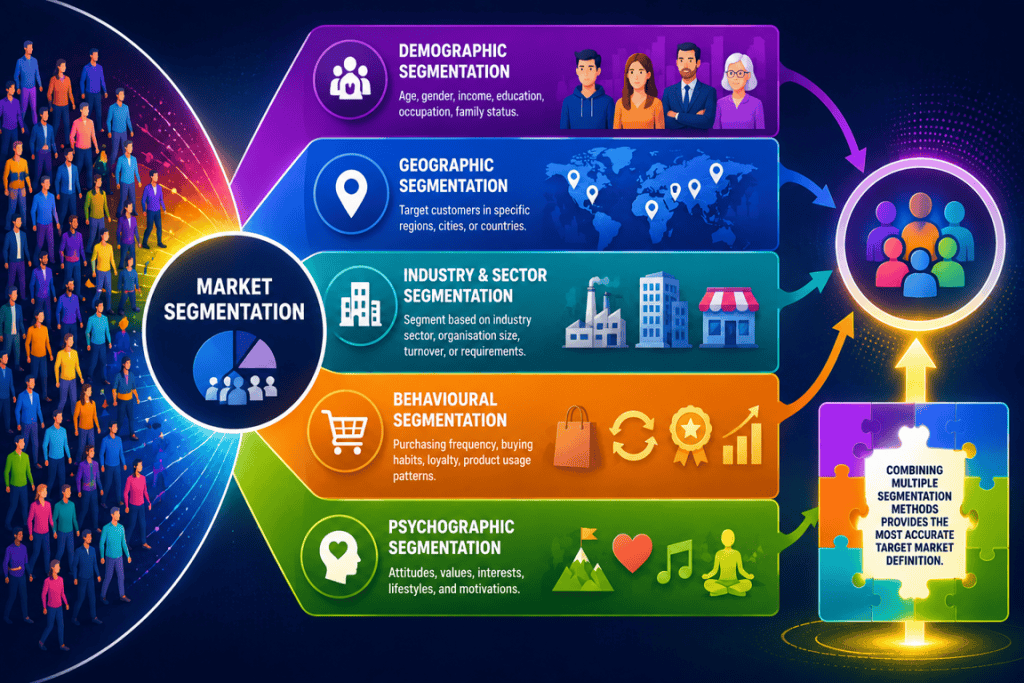
Market segmentation involves dividing a larger market into smaller groups with similar characteristics.
Several segmentation methods can be used.
Demographic Segmentation
Demographic factors include age, gender, income, education, occupation, and family status. These characteristics can influence purchasing behaviour and communication preferences.
Geographic Segmentation
Location-based segmentation helps businesses target customers within specific regions, cities, or countries. This can be particularly valuable for organisations serving local or regional markets.
Industry and Sector Segmentation
Business-to-business organisations frequently segment audiences based on industry sector, organisation size, turnover, or operational requirements.
Behavioural Segmentation
Behavioural factors include purchasing frequency, buying habits, customer loyalty, and product usage patterns.
Psychographic Segmentation
Psychographic segmentation focuses on attitudes, values, interests, lifestyles, and motivations. This approach often provides deeper insights into customer decision-making.
Combining multiple segmentation methods typically produces the most accurate target market definition.
Building Customer Personas That Support Acquisition
What Is a Customer Persona?
A customer persona is a detailed representation of an ideal customer based on research and real-world data.
Personas help businesses move beyond broad audience descriptions and develop a deeper understanding of customer behaviour. They create a more human view of the target audience and improve marketing effectiveness.
Why Customer Personas Improve Marketing Performance
Customer personas help marketing teams create more relevant content, stronger messaging, and better customer experiences.
When organisations understand their audience’s challenges, objectives, and decision-making processes, they can communicate more effectively throughout the customer journey.
Personas also improve consistency across sales, marketing, and customer service activities.
Key Information Every Customer Persona Should Include
A well-developed customer persona should include:
Business Goals
Understanding what customers are trying to achieve allows businesses to position solutions more effectively.
Challenges and Pain Points
Identifying obstacles and frustrations helps shape compelling marketing messages.
Decision-Making Factors
Understanding what influences purchasing decisions allows organisations to address concerns and objections proactively.
Preferred Marketing Channels
Knowing where customers consume information helps improve channel selection and budget allocation.
Buying Triggers
Recognising events or circumstances that prompt purchasing decisions helps improve campaign timing and relevance.
Businesses that invest time in developing customer personas often experience stronger engagement, improved lead quality, and higher conversion rates.
Customer Acquisition Strategies for UK Businesses
What Is Customer Acquisition?
Customer acquisition is the process of attracting prospective customers and converting them into paying clients. It covers every stage of the buying journey, from creating awareness through to generating enquiries, nurturing prospects, and securing sales.
A successful customer acquisition strategy does not rely on a single marketing activity. Instead, it combines multiple channels, messages, and tactics that work together to move prospects through the sales funnel. Businesses that adopt a structured acquisition strategy are more likely to generate predictable growth and achieve stronger returns from their marketing investment.
Why Customer Acquisition Requires a Strategic Approach
Many organisations make the mistake of focusing on tactics before strategy. They invest in advertising, social media, content creation, or email campaigns without first establishing clear objectives and understanding their target audience.
A strategic customer acquisition approach begins with market understanding, audience segmentation, value proposition development, and channel selection. Once these foundations are in place, tactical activities become significantly more effective.
Balancing Short-Term Wins and Long-Term Growth
Customer acquisition should support both immediate sales opportunities and future business growth.
Short-term activities such as paid advertising can generate quick results and immediate enquiries. Long-term activities such as search engine optimisation and content marketing often require more time but can deliver sustainable lead generation and lower acquisition costs over time.
The strongest acquisition strategies combine both approaches to create a balanced and resilient marketing system.
Organic Customer Acquisition Strategies
Search Engine Optimisation (SEO)
Search engine optimisation remains one of the most effective customer acquisition strategies available to UK businesses.
SEO helps organisations improve their visibility within search engine results when potential customers actively search for products, services, advice, or solutions. Unlike paid advertising, organic search visibility can continue generating leads long after content has been published.
Businesses that consistently create valuable content and optimise their websites for relevant search terms often benefit from lower acquisition costs and stronger long-term marketing performance.
Content Marketing
Content marketing focuses on creating valuable information that helps prospective customers solve problems, answer questions, and make informed decisions.
High-quality content positions a business as a trusted authority within its sector. Educational articles, guides, case studies, white papers, videos, and industry insights can all contribute to customer acquisition.
Content also supports other marketing activities. Strong content improves SEO performance, supports social media engagement, enhances email marketing campaigns, and helps nurture leads throughout the buying journey.
Email Marketing
Email marketing continues to deliver strong returns for many businesses.
Not every prospect is ready to buy immediately. Email marketing allows organisations to remain visible and maintain relationships until prospects are ready to make a purchasing decision.
Effective email campaigns provide useful information, build trust, demonstrate expertise, and encourage ongoing engagement. Businesses that consistently nurture leads often experience higher conversion rates and lower acquisition costs.
Referral Marketing
Referrals remain one of the most powerful customer acquisition channels available.
Prospective customers are often more likely to trust recommendations from existing customers than traditional advertising. Referral programmes encourage satisfied clients to recommend products or services to colleagues, friends, and professional networks.
Strong customer experiences frequently become a significant source of new business opportunities.
Paid Customer Acquisition Strategies
Google Ads
Google Ads allows businesses to appear in front of prospects actively searching for relevant products or services.
One major advantage of Google Ads is buyer intent. Prospects using search engines are often already looking for solutions, making them more likely to convert than audiences reached through interruption-based advertising.
Google Ads can generate rapid results when campaigns are properly structured and managed. At the same time, businesses must carefully monitor costs, conversion rates, and return on investment to maintain profitability.
LinkedIn Advertising
LinkedIn provides valuable opportunities for business-to-business customer acquisition.
The platform allows organisations to target decision-makers based on job title, industry, company size, seniority level, and professional interests. This targeting capability makes LinkedIn particularly effective for professional services businesses, consultants, technology providers, and B2B organisations.
LinkedIn advertising costs can be higher than other platforms, but lead quality is often significantly stronger.
Social Media Advertising
Platforms such as Facebook and Instagram allow businesses to reach highly targeted audiences based on interests, demographics, behaviours, and engagement history.
Social media advertising can be particularly effective for raising awareness, generating leads, promoting content, and retargeting website visitors.
Retargeting deserves special attention because it allows businesses to reconnect with prospects who have already demonstrated interest. These campaigns often generate stronger conversion rates than first-time advertising efforts.
Evaluating Paid Acquisition Costs
Paid acquisition activities should always be measured against commercial outcomes.
Key marketing metrics include:
Cost Per Lead (CPL)
This metric measures how much it costs to generate a new enquiry or lead.
Cost Per Acquisition (CPA)
This figure measures the total cost required to secure a paying customer.
Return on Investment (ROI)
ROI reveals whether marketing activities generate more value than they cost.
These measures help businesses allocate budgets more effectively and identify the channels producing the strongest commercial results.
Choosing the Right Customer Acquisition Channels
Why Channel Selection Matters
Selecting the wrong acquisition channels can significantly increase marketing costs and reduce effectiveness.
Different audiences consume information differently. Some decision-makers prefer search engines, while others spend significant time on LinkedIn, industry websites, professional events, podcasts, or email newsletters.
Successful businesses align their channel selection with audience behaviour rather than personal preferences.
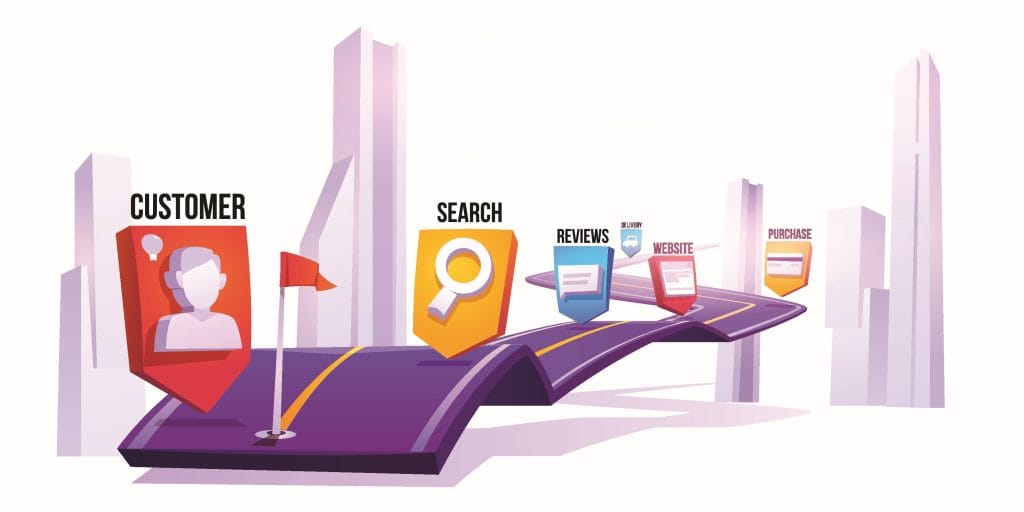
Understanding the Customer Buying Journey
Customer acquisition channels should support the entire buying journey.
Awareness-stage prospects may engage with educational content or social media posts. Prospects in the consideration stage often seek case studies, comparisons, and detailed information. Decision-stage prospects frequently require consultations, demonstrations, proposals, or direct sales engagement.
A multi-channel approach helps businesses support prospects throughout each stage of the buying process.
Avoiding Over-Reliance on a Single Channel
Many organisations become overly dependent on a single source of enquiries.
This creates risk. Search engine algorithm changes, advertising cost increases, platform policy updates, or market changes can quickly impact lead generation performance.
Diversified acquisition strategies provide greater stability and resilience over time.
Measuring Customer Acquisition Performance
Why Measurement Is Essential
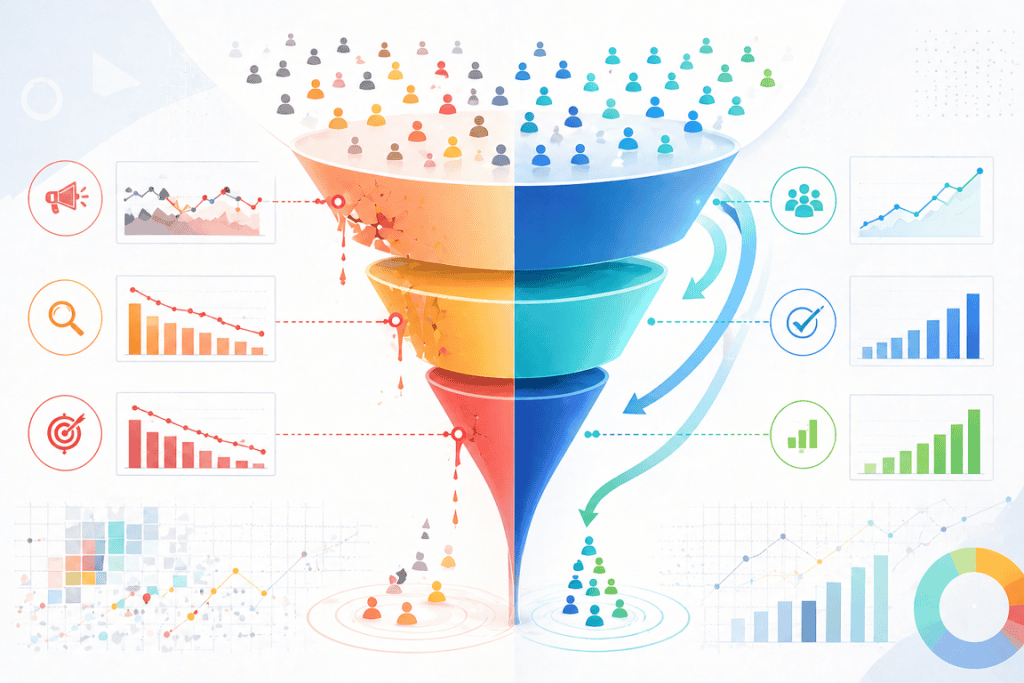
Customer acquisition without measurement is little more than guesswork.
Businesses need clear visibility into which activities generate leads, which leads become customers, and which channels contribute most effectively to revenue and profit. Data-driven decision-making allows organisations to improve performance and reduce wasted expenditure.
Key Customer Acquisition Metrics
Several metrics provide valuable insight into acquisition performance.
Customer Acquisition Cost (CAC)
CAC measures the total cost of acquiring a new customer.
Cost Per Lead (CPL)
CPL reveals the efficiency of lead generation activities.
Conversion Rate
Conversion rates indicate how effectively prospects move through the sales process.
Return on Investment (ROI)
ROI measures the commercial value generated by marketing activity.
Customer Lifetime Value (CLV)
Customer Lifetime Value measures the long-term value generated by each customer relationship.
Businesses that monitor these metrics consistently gain a clearer understanding of marketing performance and can make more informed strategic decisions. This data-driven approach aligns closely with Opportunity Marketing’s emphasis on ROI-focused marketing and measurable business growth.
Using Data to Improve Future Marketing Decisions
Data should support continuous improvement.
Performance analysis helps businesses identify successful activities, uncover weaknesses, improve conversion processes, refine targeting, and optimise budget allocation. Small improvements made consistently often generate significant long-term results.
Common Customer Acquisition Mistakes to Avoid
Focusing on Volume Instead of Quality
Large volumes of enquiries do not automatically translate into business growth. High-quality leads that closely match the target market often produce better commercial outcomes than large numbers of poorly qualified prospects.
Poor Market Segmentation
Weak segmentation frequently results in generic marketing messages that fail to resonate with any specific audience.
Weak Value Propositions
Customers need clear reasons to choose one provider over another. Businesses that struggle to communicate their value often experience lower conversion rates.
Lack of Follow-Up Processes
Many opportunities are lost because prospects are not contacted promptly or consistently. Effective follow-up processes play a critical role in customer acquisition success.
Failure to Measure Results
Organisations that fail to measure acquisition performance often continue investing in ineffective activities while overlooking more profitable opportunities.
Developing a Customer Acquisition Strategy for Sustainable Growth
Aligning Customer Acquisition With Business Objectives
Customer acquisition should support broader business goals. Growth targets, revenue objectives, profitability expectations, and market expansion plans should all influence acquisition strategy development.
Setting Realistic Growth Targets
Growth targets should be supported by data and realistic assumptions.
Businesses should understand how many leads are required, what conversion rates are achievable, and how much investment is necessary to reach specific objectives. This budgeting-backwards approach supports more accurate planning and stronger decision-making.
Creating a Structured Marketing Plan
A structured acquisition plan should clearly define:
- Target markets
- Customer personas
- Key marketing messages
- Marketing channels
- Budget allocations
- Performance metrics
- Review processes
Structured planning helps eliminate uncertainty and improves marketing accountability.
Testing, Measuring and Refining Activities
Customer acquisition should never remain static.
Market conditions change, customer behaviours evolve, competitors adapt, and technology advances. Continuous testing, measurement, and refinement help businesses maintain strong performance and improve results over time.
How Opportunity Marketing Helps Businesses Identify Target Markets and Acquire Customers
Opportunity Marketing helps SMEs develop strategy-led marketing systems designed to generate measurable business growth. The consultancy focuses on helping organisations understand their markets, define their ideal customers, strengthen their positioning, and develop acquisition strategies built around commercial objectives.
Services such as the Fast Track Marketing Plan, Marketing Health Check Audit, Marketing Mentoring, and Strategic Marketing Consultancy provide businesses with structured guidance, practical recommendations, and measurable growth frameworks. This approach helps reduce wasted marketing spend while improving lead generation, conversion rates, and return on investment.
Turning Target Market Knowledge Into Business Growth
Target markets and customer acquisition strategies are closely connected. Businesses that understand their audiences can create stronger marketing messages, select more effective channels, improve conversion rates, and generate higher-quality customers.
Successful customer acquisition begins with market understanding, customer insight, strategic planning, and continuous measurement. Organisations that focus on these foundations place themselves in a stronger position to achieve sustainable growth, improve marketing performance, and build long-term commercial success.
A strategy-first approach allows businesses to stop chasing marketing tactics and start building predictable systems that consistently attract, engage, and convert the right customers.
Work With Opportunity Marketing
Identifying the right target market is only the first step. Turning that insight into a structured customer acquisition strategy requires clear positioning, effective marketing channels, measurable objectives, and a plan focused on generating a return on investment.
Opportunity Marketing helps SMEs, business owners, directors, and marketing teams develop practical, strategy-led marketing plans that attract the right customers and support sustainable business growth.
Whether you need a Fast Track Marketing Plan, Marketing Health Check Audit, Marketing Mentoring, or ongoing strategic marketing support, we can help you build a customer acquisition system designed around your business goals and commercial objectives.
Ready to attract more of the right customers? Contact Opportunity Marketing today and discover how a strategy-first approach can help accelerate your growth.
📍 Visit: opportunitymarketing.co.uk
📞 Call: 0333 320 4108
📧 Email: info@opportunitymarketing.co.uk


Ian Kirk
Founder at Opportunity Marketing
Ian is the founder of Opportunity Marketing marketing, with over 18 years of experience in successfully setting up marketing departments, creating marketing strategies and implementing these strategies across a wide number of SME companies in both the B2B and B2C sectors through a variety of channels.

A-Z OF MARKETING
A complete guide that simplifies the wonderful world of marketing.
 Download Now