 Skip to main content
Skip to footer
Skip to main content
Skip to footer

Marketing Strategy
How Digital Marketing Drives Measurable Business Growth Through Strategy

Why Digital Marketing Fails Without Strategy and What Growth Really Means
Digital Marketing Is Rarely the Real Problem
Digital marketing is often blamed when growth stalls, leads disappoint, or budgets fail to deliver a return. That conclusion is usually wrong. Digital channels tend to expose weaknesses rather than create them. Poor results typically stem from unclear direction, fragmented decision-making, or a lack of commercial focus long before any campaign goes live. When digital activity struggles, it is often reflecting deeper strategic issues within the business rather than technical failure.
Many businesses approach digital marketing as a collection of tools to activate rather than a system to guide growth. Websites, paid media, content, and social platforms are introduced without a shared purpose or agreed measures of success. This approach creates activity without direction. Visibility may increase, but commercial impact remains unpredictable. Strategy gives digital marketing its role, its priorities, and its boundaries. Without that framework, digital effort becomes reactive, expensive, and difficult to justify.
The Strategic Marketing Mastery course equips SME business owners, directors, and marketing professionals with the strategic clarity required to make digital marketing work as a measurable growth driver rather than a cost centre. The course breaks down how to define clear commercial objectives, identify the right audiences, shape strong positioning, and select digital channels that directly support business growth, all before any tactical execution takes place. Through a structured, step-by-step framework, learners gain the confidence and capability to make informed marketing decisions, measure what truly matters, and build a sustainable, strategy-led digital marketing approach that delivers long-term results. Contact Us: 0333 320 4108 or info@opportunitymarketing.co.uk.
What Measurable Business Growth Actually Looks Like
Business growth is measurable only when it connects marketing activity to commercial outcomes. Revenue, profitability, pipeline quality, customer value, and predictability all matter far more than surface-level engagement metrics. Page views, impressions, and follower growth may indicate reach, but they do not demonstrate business impact in isolation.
Effective measurement starts with clarity about what growth means for the organisation. Some businesses require consistent lead volume to support a sales team. Others prioritise higher-value customers, improved retention, or reduced acquisition costs. Strategy defines which outcomes matter most and which indicators should be tracked. Digital marketing then becomes a contributor to those outcomes rather than a standalone performance function.
A clear measurement framework also brings discipline. Marketing decisions can be assessed objectively, budgets can be defended with confidence, and leadership teams gain visibility over performance. Without that clarity, reporting becomes descriptive rather than useful, and marketing struggles to earn credibility at a commercial level.
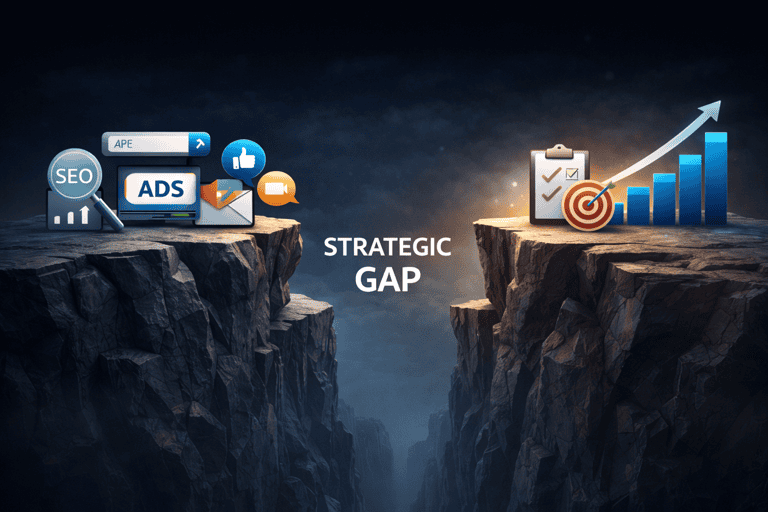
The Strategic Gap That Undermines Digital Performance
Many small and mid-sized organisations find themselves in a similar situation. Marketing activity commences prior to making fundamental decisions. Target audiences remain broad or poorly defined. Differentiation is assumed rather than articulated. Messaging varies depending on channel or supplier. Digital marketing amplifies these issues because it operates at speed and scale.
This strategic gap leads to predictable problems. Conversion rates remain low because messaging lacks relevance. Paid media costs rise because targeting is inefficient. Content fails to gain traction because it does not speak to a defined need. Digital channels highlight the absence of focus quickly, often before teams understand why performance feels disappointing.
Closing this gap requires stepping back from execution and addressing foundational questions. Who is the business trying to contact? Why should that audience choose this offer over alternatives? What commercial outcome matters most right now? Strategy answers these questions and provides a reference point for every digital decision that follows.
Strategy and Tactics Are Not the Same Thing
Strategy and tactics are often used interchangeably, yet they serve very different purposes. Strategy sets direction. It defines objectives, priorities, and trade-offs. Tactics are the actions taken to deliver that direction. Digital marketing channels sit firmly in the tactical category.
Treating tactics as strategy often leads to problems. Running paid ads, producing content, or improving SEO are not strategic decisions on their own. They are delivery choices that require context. Strategy explains why a particular channel is appropriate, how success will be measured, and when investment should increase or stop.
A strategy-led approach also introduces restraint. Not every channel needs to be used. Not every trend needs to be followed. Tactics become selective rather than reactive. This discipline protects budgets and improves focus, allowing digital marketing to build momentum rather than scatter effort across too many fronts.
Why Digital Marketing Exposes Weak Strategy Faster
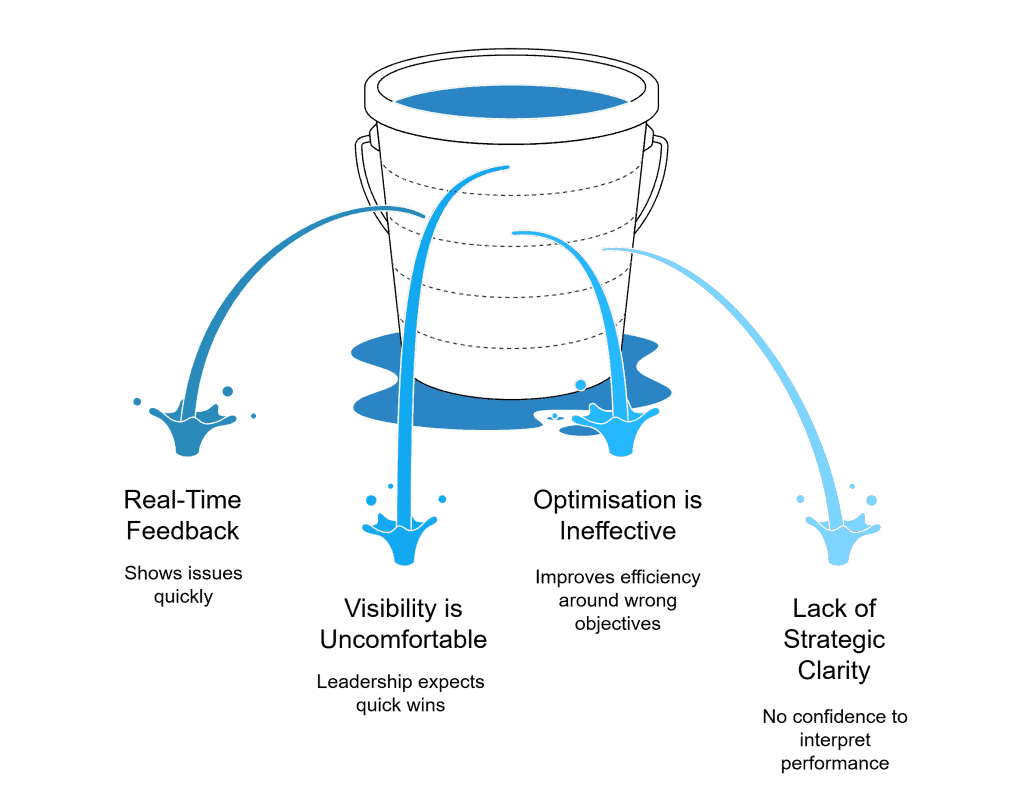
Digital marketing operates in real time and produces immediate feedback. Weak positioning, unclear messaging, or poor audience definition show up quickly through low engagement, high costs, or inconsistent results. Traditional marketing channels often hide these issues for longer due to slower feedback loops.
This visibility can be uncomfortable, particularly for leadership teams expecting quick wins. Optimising campaigns or changing suppliers may appear to offer a solution, but these actions rarely address the root cause. Without strategic clarity, optimisation simply improves efficiency around the wrong objectives.
A strong strategy acts as a stabilising force. It provides teams confidence to interpret performance correctly and adjust with purpose rather than panic. Digital data becomes insight rather than noise, supporting informed decision-making instead of reactive change.
The Advantages and Trade-Offs of a Strategy-Led Approach
Leading with strategy offers clear benefits. Digital investment is aligned with business priorities. Measurement improves because outcomes are defined in advance. Teams gain focus, and suppliers receive clearer direction. Over time, this approach builds predictability and confidence in marketing performance.
There are also trade-offs to acknowledge. Strategy takes time and requires honest discussion about constraints, ambition, and capability. It may delay execution in the short term, which can feel uncomfortable in fast-moving environments. Some opportunities will be intentionally deprioritized, which demands discipline.
These trade-offs are necessary. Short-term activity without direction often costs more in the long run through wasted spending and missed opportunity. Strategy-led digital marketing favours sustainable growth over quick wins, supporting businesses that want clarity, control, and measurable progress rather than constant experimentation without learning.
Setting the Foundation for Sustainable Growth
Digital marketing becomes a growth driver only when it operates within a clear strategic framework. Strategy defines what success looks like, who matters most, and how resources should be allocated. Digital channels then play a defined role in delivering commercial outcomes rather than competing for attention or budget.
This first stage is about reframing expectations. Digital marketing is not a substitute for strategy, nor is it a shortcut to growth. It is an amplifier. When the underlying strategy is clear, digital activity becomes more effective, more accountable, and easier to scale. Without that clarity, performance will remain inconsistent, regardless of channel choice or spend.
How Strategy Turns Digital Marketing into a Predictable Growth Engine
Starting with Commercial Objectives Rather Than Digital Channels
Effective digital marketing begins with commercial intent, not platform selection. Growth targets, revenue ambition, capacity constraints, and margin expectations must shape marketing decisions long before channels are discussed. When organisations start with tactics, digital activity often becomes disconnected from what the business actually needs to achieve.
A strategy-led approach forces clarity at the outset. Leadership teams must agree on what success looks like in practical terms. That may involve increasing qualified leads, improving conversion rates, raising average customer value, or stabilising revenue through retention. Each objective carries different implications for digital investment. Strategy creates alignment between business ambition and marketing contribution, allowing digital activity to support growth rather than operate independently of it.
This approach also prevents over-investment. Not every growth objective requires more traffic or broader reach. Some require better targeting, stronger messaging, or improved user experience. Strategy helps organisations decide where digital marketing should focus and, equally important, where it should not.

Audience Strategy as the Foundation of Digital Effectiveness
Digital marketing performs best when it speaks to a clearly defined audience with a specific need. Broad targeting may increase reach, but it rarely improves results. Strategy-led audience definition goes beyond basic demographics and looks at behaviour, intent, buying triggers, and decision-making context.
A clear audience strategy allows digital channels to work harder. Paid media becomes more efficient because targeting is refined. Content becomes more relevant because it addresses known challenges. Websites convert more effectively because messaging aligns with user expectations. Without this clarity, digital marketing often attracts attention from the wrong people, inflating costs without improving outcomes.
Audience strategy also introduces focus. Organisations gain permission to exclude audiences that are unlikely to convert or deliver value. Such an approach can feel counterintuitive, particularly for growth-focused teams, but narrowing focus often improves performance. Strategy replaces the idea of reaching more people with the discipline of reaching the right people.
Strategic Positioning and Its Role in Digital Performance
Positioning answers a critical question: why should a customer choose this organisation over alternatives? Digital marketing amplifies the answer to that question across multiple touchpoints. When positioning is weak or unclear, digital activity struggles to differentiate, regardless of budget or creativity.
A strong strategic position provides consistency. Websites, paid ads, content, and email campaigns reinforce the same core message. Prospective customers encounter clarity rather than contradiction. This consistency reduces friction and builds confidence throughout the decision-making process.
Positioning also supports prioritisation. Not every feature or benefit needs to be promoted. Strategy clarifies which aspects of the offer matter most to the target audience and which should take precedence in digital communication. This focus improves message recall and conversion performance, particularly in competitive markets where attention is limited.

Mapping the Digital Customer Journey with Intent
Strategy-led digital marketing views the customer journey as a structured progression rather than a collection of disconnected interactions. Awareness, consideration, and conversion each serve a different purpose and require different types of engagement. Strategy defines how digital channels support each stage.
At early stages, digital activity may focus on education, visibility, and credibility. During consideration, content and messaging shift towards proof, reassurance, and differentiation. Conversion activity prioritises clarity, simplicity, and confidence. Strategy ensures that digital touchpoints work together rather than compete for attention.
This approach also highlights gaps. Many organisations invest heavily in lead generation without sufficient support for consideration or conversion. Strategy reveals where the journey breaks down and where digital marketing should adapt. As a result, investment becomes more balanced and outcomes become more predictable.
Strategy-Led Channel Selection and Prioritisation
Not every digital channel suits every organisation. Strategy provides the criteria for selection and prioritisation. Audience behaviour, buying cycles, internal capability, and commercial objectives all influence which channels deserve focus.
A strategy-led approach encourages depth rather than breadth. Instead of spreading resources thinly across multiple platforms, organisations concentrate on channels that align most closely with their objectives. This focus improves learning, optimisation, and return on investment over time.
Channel prioritisation also supports governance. Teams understand why certain platforms matter and others do not. This clarity reduces internal debate, supplier influence, and reactive decision-making. Digital marketing becomes intentional rather than experimental, supporting sustainable growth rather than constant change.
Measurement Frameworks Built from Strategy
Measurement becomes meaningful only when it reflects strategic intent. Strategy defines which metrics matter and how performance should be interpreted. Digital dashboards shift from reporting activity to evaluating contribution.
A strategy-led measurement framework focuses on indicators that connect digital activity to business outcomes. Lead quality, conversion rates, acquisition cost, and customer value take precedence over surface metrics. This shift supports better decision-making and more constructive performance discussions.
Clear measurement also supports accountability. Marketing investment can be reviewed objectively, adjustments can be made with confidence, and leadership teams gain visibility over progress. Strategy provides the context that turns data into insight, helping organisations move from reporting to improvement.

Balancing Structure with Flexibility
Strategy does not remove flexibility from digital marketing. It provides boundaries within which experimentation can occur. Testing, learning, and optimisation remain essential, but they operate in service of defined objectives rather than constant reinvention.
A strategy-led framework allows teams to adapt without losing direction. Digital performance informs strategic refinement, not wholesale change. This balance supports long-term improvement while avoiding the instability that often comes from chasing short-term results.
Flexibility also becomes purposeful. Experiments are designed to answer specific questions rather than generate activity. Over time, this approach builds confidence in digital decision-making and reduces wasted effort.
Turning Digital Marketing into a Predictable Growth Engine
Strategy transforms digital marketing from a collection of activities into a coordinated system. Objectives guide decisions, audiences shape messaging, and measurement supports accountability. Digital channels work together rather than in isolation, improving consistency and effectiveness.
This shift does not promise instant results. It creates the conditions for predictable growth. Digital marketing becomes easier to manage, easier to justify, and easier to scale. Most importantly, it becomes aligned with the commercial reality of the business rather than operating as a separate function.
Measuring What Matters and Building Sustainable Digital Growth
Shifting Focus from Activity Metrics to Commercial Measurement
Meaningful measurement begins when organisations stop equating activity with progress. Digital dashboards often overflow with data, yet very little of it informs better business decisions. Clicks, impressions, and engagement rates may indicate exposure, but they do not explain whether marketing contributes to growth. Strategy changes the conversation by defining which outcomes matter and which metrics signal progress towards them.
A strategy-driven measurement framework prioritises indicators that connect digital activity with commercial impacts. Lead quality, conversion rates, cost per acquisition, pipeline value, and customer lifetime contribution offer assessments of performance that leadership teams can act on. This approach reduces noise and creates clarity. Data becomes a tool for decision-making rather than a reporting obligation, helping businesses invest with confidence rather than an assumption.

Making Digital Marketing Accountable to the Business
Accountability emerges when digital marketing operates against agreed objectives and measurable outcomes. The strategy establishes these expectations in advance, enabling an objective review of performance. This shift removes emotion from performance discussions and replaces opinion with evidence.
Clear accountability benefits both leadership and marketing teams. Leaders gain visibility over how marketing supports growth, while teams receive clearer direction and fairer evaluation. Digital activity can be challenged, refined, or scaled based on contribution rather than perception. Accountability also discourages reactive change. Decisions are grounded in data and strategic intent, reducing the temptation to chase trends or switch direction prematurely.
This approach requires leadership engagement. Marketing accountability works best when senior decision-makers take an active interest in outcomes rather than tactics. Strategy provides the shared language that allows marketing performance to be discussed at a commercial level, strengthening trust and alignment across the organisation.
Building Measurement into Everyday Decision-Making
Measurement should inform action, not sit in isolation. Strategy-led businesses embed performance reviews in routine decision-making. Campaigns, channels, and budgets are assessed regularly against strategic objectives, allowing adjustments to be made with purpose.
This discipline supports continuous improvement. Underperforming activity can be refined or stopped. High-performance channels can be prioritised. Over time, patterns emerge that improve forecasting and planning. Evidence, not intuition, informs decisions in digital marketing, making it more predictable.
Embedding measurement also improves collaboration. Marketing, sales, and leadership teams share a clearer understanding of what success looks like and how it is tracked. This shared perspective reduces friction and aligns effort around outcomes that matter most to the business.
Continuous Review Without Constant Reinvention
Strategy-led digital marketing evolves through review rather than reinvention. Regular performance analysis highlights what is working, what is not, and why. Adjustments are made within a stable strategic framework, allowing improvement without loss of direction.
This approach contrasts with reactive change driven by short-term results. Sudden shifts in messaging, channel focus, or supplier relationships often create disruption without addressing root causes. Strategy provides continuity, allowing digital marketing to mature and improve over time.
Continuous review also supports learning. Teams develop a deeper understanding of audience behaviour, channel performance, and conversion drivers. That knowledge compounds, strengthening future decisions and reducing wasted effort. Strategy acts as a reference point that keeps learning focused and relevant.

Avoiding Common Strategic Mistakes That Undermine Growth
Several recurring mistakes limit the effectiveness of digital marketing. One of the most common involves chasing trends without assessing relevance. New platforms or tactics may appear attractive, yet they rarely align with every audience or objective. Strategy provides a filter that protects against distraction.
Another frequent issue involves supplier-led decision-making. When agencies or platforms dictate direction, digital activity can drift away from business priorities. Strategy restores control by clarifying objectives and criteria for success. Suppliers become contributors rather than drivers of direction.
Short-term thinking also undermines growth. Pressure for immediate results can lead to over-investment in quick wins at the expense of sustainable performance. Strategy encourages balance, supporting near-term objectives while building long-term capability and confidence.
Governance and Ownership in Strategy-Led Digital Marketing
Clear governance supports sustainable digital growth. Strategy defines roles, responsibilities, and decision rights, reducing ambiguity and internal conflict. Teams understand who owns outcomes, who approves investment, and how performance is reviewed.
This structure improves efficiency. Decisions are made faster because criteria are clear. Escalation is reduced because expectations are shared. Digital marketing becomes easier to manage, particularly for businesses with limited internal resources.
Ownership also strengthens accountability. When responsibilities are defined, performance discussions become constructive rather than defensive. Strategy provides the framework that allows ownership to exist without blame, supporting improvement rather than avoidance.

Balancing Discipline with Adaptability
Strategy-led digital marketing values discipline, yet it does not resist change. Adaptability remains essential in a digital environment, but it operates within agreed boundaries. Experiments are designed to test assumptions or improve performance against strategic goals.
This balance protects focus while encouraging learning. Teams can test new approaches without losing sight of priorities. Successful experiments can be scaled, while unsuccessful ones provide insight rather than disruption. Strategy creates the conditions for responsible innovation rather than constant upheaval.
Adaptability also becomes intentional. Change is driven by evidence and opportunity rather than pressure or fear. This mindset supports confidence in digital decision-making and reduces the stress often associated with managing fast-moving channels.
Establishing Digital Marketing as a Sustainable Growth Capability
When strategy leads, digital marketing becomes a capability rather than a cost. Measurement clarifies contribution, accountability strengthens trust, and continuous review supports improvement. Over time, this approach builds predictability and resilience.
Sustainable growth requires more than tactical execution. It requires clarity, discipline, and alignment between marketing activity and business ambition. Strategy provides that alignment, turning digital marketing into a reliable driver of measurable progress rather than a source of uncertainty.
Digital channels will continue to evolve, yet the principles that support growth remain consistent. Organisations that lead with strategy gain control over their marketing investment, build confidence in their decisions, and create the foundations for long-term success.
Work With Opportunity Marketing
Digital marketing delivers measurable business growth only when it is led by a clear, commercially focused strategy. Opportunity Marketing helps small and medium-sized businesses (SMEs) by taking away uncertainty, cutting down on wasted marketing money, and replacing scattered efforts with a clear strategy that connects marketing choices to business goals.
Through services such as the Fast Track Marketing Plan, Marketing Health Check Audit, Outsourced Marketing, and Marketing Mentoring, we help business owners and leadership teams gain clarity on where to focus, which channels genuinely matter, and how to measure performance in a way that supports sustainable growth. If you want marketing decisions grounded in evidence, accountability, and long-term commercial value rather than tactics and trends, Opportunity Marketing provides the strategic support to help you move forward with confidence.
Visit:opportunitymarketing.co.uk
Call: 0333 320 4108
Email: info@opportunitymarketing.co.uk


Ian Kirk
Founder at Opportunity Marketing
Ian is the founder of Opportunity Marketing marketing, with over 18 years of experience in successfully setting up marketing departments, creating marketing strategies and implementing these strategies across a wide number of SME companies in both the B2B and B2C sectors through a variety of channels.

A-Z OF MARKETING
A complete guide that simplifies the wonderful world of marketing.
 Download Now


