Skip to main content
Skip to footer
Skip to main content
Skip to footer

How To:, Marketing Techniques, Online Marketing
Online Marketing for Small Businesses: Where to Start
Online Marketing Strategy for Start-ups and Small Businesses
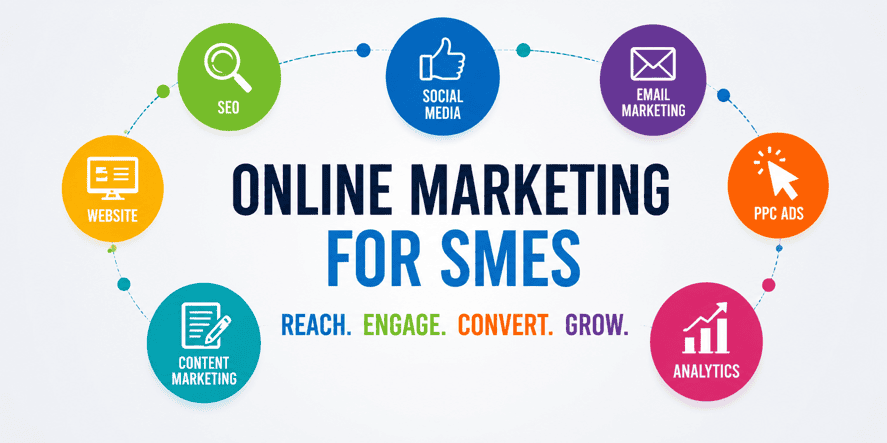
Online marketing helps small businesses improve visibility, generate leads, and increase sales through channels such as SEO, content marketing, social media, email marketing, and paid advertising. Businesses achieve stronger results when marketing activity is built around clear objectives, audience targeting, and measurable ROI.
Online marketing has become one of the most important growth tools available to UK small businesses. Customers now research products, compare services, read reviews, and evaluate organisations online before making purchasing decisions. A business without a clear online presence risks losing visibility, credibility, and opportunities to competitors that understand how to market themselves digitally.
Marketing Challenges for SMEs
Many SMEs struggle because online marketing feels overwhelming. Business owners are often presented with endless advice about social media, SEO, paid advertising, email marketing, and content creation without understanding which activities genuinely contribute to growth. This confusion leads to wasted spending, inconsistent messaging, and frustration when results fail to materialise.
A structured marketing strategy changes that position completely. Businesses that understand their audience, define clear objectives, and measure performance accurately are far more likely to generate profitable results. Online marketing should never operate as random activity. Every channel, campaign, and investment should support wider commercial objectives and measurable growth outcomes.
Opportunity Marketing’s strategy-first philosophy reflects this principle by focusing on measurable ROI before tactical execution begins.
Businesses struggling to understand where to start with online marketing can benefit from Opportunity Marketing’s Strategic Marketing Mastery course, which provides practical guidance on building structured, ROI-focused marketing strategies for sustainable business growth. The course helps SME business owners, managers, marketers, and consultants develop a stronger understanding of audience targeting, lead generation, SEO, content marketing, performance measurement, and strategic decision-making so they can stop relying on guesswork and start making more commercially informed marketing decisions. Strategic Marketing Mastery also supports organisations looking to reduce wasted marketing spend, improve conversion performance, and create measurable online marketing systems that align directly with their wider business objectives. Contact Us: 0333 320 4108 or info@opportunitymarketing.co.uk.
Understanding What Online Marketing Actually Means
What Is Online Marketing?
Online marketing refers to the use of digital channels, platforms, and technologies to promote products, services, or organisations to target audiences. It includes activities such as search engine optimisation (SEO), social media marketing, content marketing, email campaigns, paid advertising, and website optimisation.
Many businesses confuse online marketing with advertising alone. Effective online marketing is much broader. Advertising may generate visibility quickly, but long-term digital growth usually depends on building trust, authority, customer engagement, and measurable customer journeys. A business with a strong website, useful content, clear messaging, and accurate tracking often outperforms organisations that simply spend heavily on adverts without strategic direction.
Successful online marketing also supports wider business objectives. Marketing should contribute directly to lead generation, customer acquisition, retention, profitability, and long-term brand positioning. Businesses that separate marketing from commercial objectives often struggle to measure success accurately.
Why Online Marketing Matters for Small Businesses
Small businesses now compete in a marketplace where digital visibility strongly influences buying behaviour. Customers frequently search online before contacting a business, visiting premises, or making purchases. This applies across sectors including professional services, hospitality, retail, construction, education, and manufacturing.
Online marketing creates opportunities for SMEs to compete against larger organisations without requiring enormous budgets. Strong SEO, effective local visibility, and targeted content can allow smaller organisations to attract highly relevant audiences at a fraction of traditional advertising costs.
Trust also plays a major role. Customers expect businesses to have a professional website, positive reviews, visible contact information, and evidence of credibility online. Organisations lacking these elements may appear outdated or unreliable, even if their products or services are excellent.
Common Online Marketing Mistakes Made by SMEs
Many SMEs waste marketing budgets because they focus on activity rather than outcomes. A common mistake involves launching social media campaigns or paid adverts without clear objectives, audience targeting, or tracking systems. This creates marketing noise rather than measurable business growth.
Another major issue involves copying competitors blindly. What works for one organisation may fail entirely for another because audiences, positioning, budgets, and objectives differ significantly. Marketing decisions should always reflect the organisation’s own commercial goals and customer behaviour.
Businesses also regularly focus on vanity metrics such as likes, impressions, and followers while ignoring conversion rates, customer acquisition costs, and ROI. Opportunity Marketing’s frameworks repeatedly highlight that marketing credibility depends on measurable commercial outcomes rather than surface-level engagement.
Setting Clear Marketing Objectives Before Spending Money
Why Marketing Goals Must Come First
Marketing without objectives creates inconsistency and confusion. Businesses often spend money on websites, social media, SEO, or advertising without understanding what success actually looks like. This leads to disconnected activity, unrealistic expectations, and poor financial performance.
Clear marketing objectives provide direction. They allow organisations to prioritise activities that support commercial growth rather than chasing trends or reacting emotionally to competitors. A business aiming to increase qualified enquiries requires a different strategy from one focused on customer retention or local brand awareness.
Commercial clarity also improves accountability. Marketing becomes measurable when organisations define objectives such as increasing enquiries by 20%, reducing customer acquisition costs, or improving conversion rates.
Defining Realistic Online Marketing Goals for SMEs
Revenue and Sales Objectives
Many SMEs begin online marketing because they want to increase revenue. This objective should be broken down into measurable outcomes such as additional enquiries, bookings, consultations, or product sales.
Businesses should calculate how many new customers are required to achieve growth targets. Opportunity Marketing’s budgeting backwards methodology demonstrates how organisations can reverse engineer marketing investment based on commercial objectives rather than arbitrary spending limits.
Brand Visibility and Awareness
Brand awareness remains important for organisations operating in competitive sectors. Customers are more likely to trust businesses they recognise online through search visibility, social media activity, educational content, and customer reviews.
Awareness campaigns should still connect to measurable outcomes. Visibility without engagement or conversions rarely delivers sustainable business growth.
Lead Generation and Customer Acquisition
Lead generation focuses on attracting potential customers with genuine purchase intent. Businesses should prioritise qualified enquiries rather than raw traffic volume. Ten highly relevant leads usually hold more commercial value than thousands of irrelevant website visitors.
Customer acquisition costs should also be monitored carefully. A business spending £500 to acquire a customer worth £200 creates an unsustainable marketing model.
Understanding Your Target Audience Before Marketing Online
Why Audience Understanding Is Critical
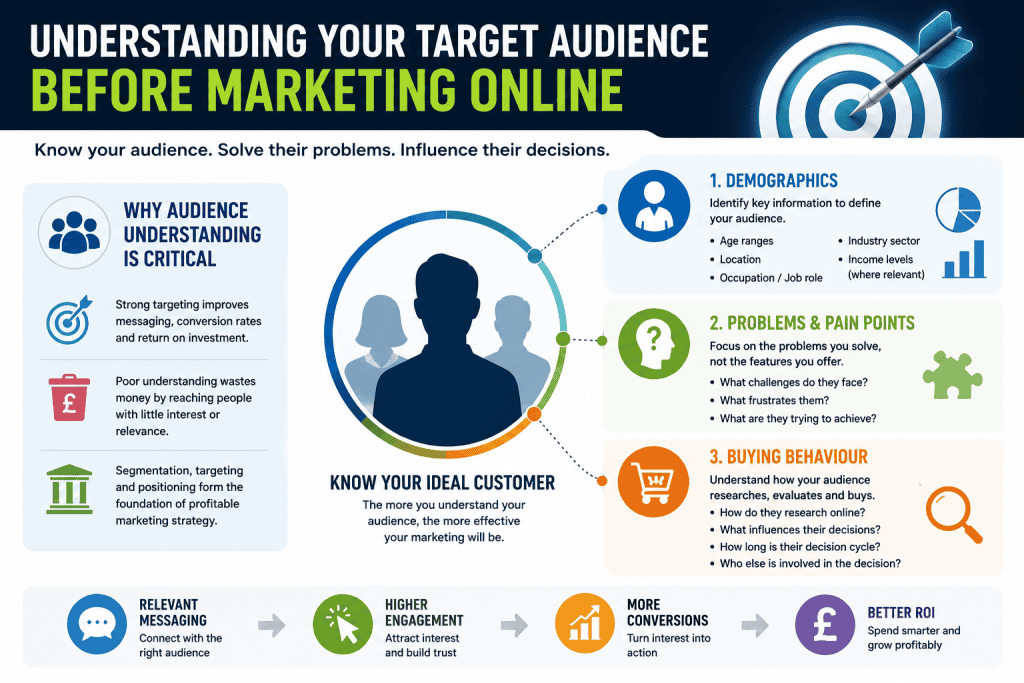
Audience understanding sits at the centre of successful online marketing. Businesses that market to everyone generally connect with nobody effectively. Strong targeting improves messaging, conversion rates, and return on investment.
Poor audience understanding wastes money because campaigns reach people with little interest, low purchase intent, or no relevance to the organisation’s services. This issue affects both paid and organic marketing efforts.
Opportunity Marketing repeatedly highlights that segmentation, targeting, and positioning form the foundation of profitable marketing strategy.
Identifying Your Ideal Customer
Demographics
Businesses should identify key demographic information including age ranges, location, occupation, industry sector, and income levels where relevant. A local plumbing business targeting homeowners requires a very different approach from a B2B consultancy targeting directors or procurement teams.
Customer Problems and Pain Points
Strong marketing focuses on customer problems rather than organisational features. Customers rarely buy products or services simply because they exist. They buy solutions to frustrations, challenges, or operational issues.
A marketing consultant, for example, may solve problems relating to poor lead generation, weak ROI, inconsistent branding, or ineffective strategy. Messaging becomes far stronger when it addresses these pain points directly.
Buying Behaviour
Understanding how customers research online is essential. Some audiences compare reviews extensively before making decisions. Others prioritise speed, convenience, or price. B2B customers often require longer decision-making cycles involving multiple stakeholders.
This behavioural insight influences content strategy, advertising approaches, and conversion processes.
Building a Strong Online Foundation
Why Your Website Is Your Most Important Digital Asset
A website acts as the centre of most online marketing strategies. Social media platforms, advertising campaigns, SEO efforts, and email marketing activities typically direct users back to the website where conversions occur.
Businesses relying solely on social media risk losing control of their audience visibility because platforms constantly change algorithms, policies, and reach limitations. A professionally structured website gives organisations greater control over branding, lead generation, customer experience, and performance tracking.
Essential Features Every SME Website Should Have
Clear Messaging and Value Proposition
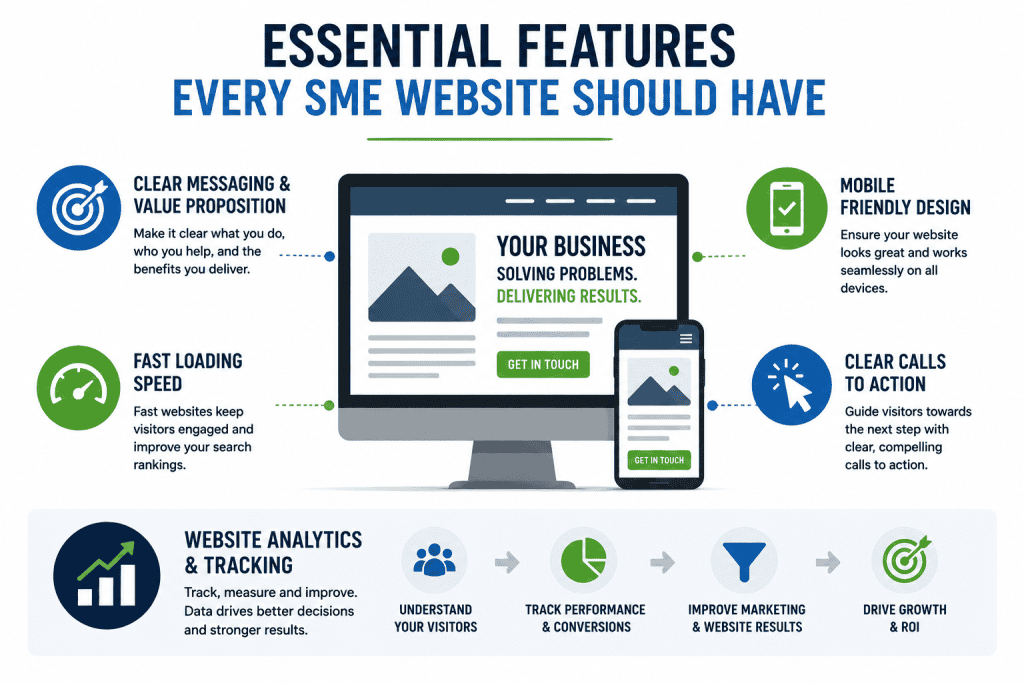
Visitors should understand quickly what the organisation does, who it serves, and why it differs from competitors. Confusing messaging increases bounce rates and reduces enquiries.
Strong value propositions communicate measurable benefits rather than vague marketing language. Businesses should explain problems solved, outcomes delivered, and commercial advantages clearly.
Mobile Friendly Design
Large volumes of online traffic now come from smartphones and tablets. Poor mobile usability damages customer experience, SEO visibility, and conversions.
Websites should load quickly, display properly across devices, and provide clear navigation for mobile users.
Fast Loading Speed
Slow websites create major performance problems. Visitors often leave pages within seconds if loading times are poor. Search engines also prioritise faster websites within rankings.
Website speed affects every stage of the customer journey including engagement, conversions, and customer trust.
Clear Calls to Action
Websites should guide visitors towards meaningful actions such as contacting the business, requesting quotations, booking consultations, or downloading resources.
Many SME websites fail because they provide information without directing users clearly towards the next step.
The Importance of Website Analytics and Tracking
Analytics allow businesses to understand how users interact with their websites. Organisations should track traffic sources, page performance, conversions, and customer behaviour from the beginning.
Google Analytics, CRM systems, and conversion tracking tools provide visibility into marketing performance. Businesses operating without data often make poor decisions because they rely on assumptions rather than measurable evidence.
Search Engine Optimisation (SEO): Getting Found Online
What Is SEO?
SEO involves improving website visibility within search engine results pages. Strong SEO allows businesses to appear when potential customers search for relevant products, services, or information online.
Organic SEO differs from paid advertising because businesses do not pay directly for each click. Instead, search visibility improves through content quality, website optimisation, technical performance, and authority signals.
Why SEO Matters for Small Businesses
SEO provides long-term visibility and can reduce reliance on advertising spend. Businesses ranking well for commercial search terms often receive consistent traffic and enquiries without ongoing advertising costs.
SEO also supports credibility. Customers frequently trust organisations appearing prominently within search results because visibility suggests authority and relevance.
Core SEO Foundations for SMEs
Keyword Research
Businesses should identify what potential customers actually search for online. Effective keyword research focuses on user intent rather than guessing popular phrases.
Commercial keywords such as “marketing consultant for SMEs” often produce stronger conversion potential than broad informational phrases.
On Page SEO
Page titles, headings, internal links, meta descriptions, and content structure all influence search performance. Content should answer customer questions clearly while remaining useful and readable.
Local SEO
Local SEO remains particularly important for UK SMEs serving regional audiences. Optimising Google Business Profile listings, local keywords, reviews, and location pages improves local search visibility substantially.
Content Marketing: Building Trust and Authority
What Is Content Marketing?
Content marketing involves creating useful, relevant material designed to attract, educate, and engage target audiences. Examples include blog articles, guides, videos, case studies, and downloadable resources.
Educational content performs strongly because customers frequently research before making purchasing decisions. Businesses that answer questions clearly position themselves as credible experts.
Why Content Marketing Works for SMEs
Content marketing supports both SEO and lead generation simultaneously. Useful content attracts organic search traffic while building trust with prospective customers.
Businesses publishing consistent educational content often generate stronger long-term results than organisations relying entirely on advertising.
Types of Content Small Businesses Should Create
Blog Articles
Articles addressing customer questions, industry problems, and practical advice help businesses increase visibility and authority.
Case Studies and Success Stories
Case studies demonstrate measurable outcomes and build confidence with potential customers. Real-world results often influence decision-making more effectively than generic claims.
Video Content
Video continues to grow across digital platforms. SMEs can create practical video content including tutorials, introductions, behind the scenes insights, and customer guidance.
Social Media Marketing for Small Businesses

Choosing the Right Social Media Platforms
Businesses should prioritise social platforms matching audience behaviour rather than attempting to appear everywhere simultaneously.
LinkedIn for B2B Businesses
LinkedIn works particularly well for professional services, consultants, recruiters, trainers, and B2B organisations. Thought leadership content and educational posts can generate strong engagement with decision-makers.
Facebook for Community Engagement
Facebook remains valuable for local businesses and community-driven marketing strategies.
Instagram for Visual Businesses
Hospitality, beauty, retail, food, and lifestyle organisations often perform well on Instagram due to its visual format.
Why SMEs Should Avoid Trying to Be Everywhere
Attempting to manage every platform usually weakens quality and consistency. Smaller organisations should focus resources on the channels most likely to deliver measurable commercial outcomes.
Paid Advertising: Where SMEs Should Start
Understanding Paid Online Advertising
Paid advertising allows businesses to generate visibility quickly through search engines and social media platforms. Effective campaigns depend heavily on targeting, messaging, landing pages, and conversion tracking.
Google Ads for SMEs
Google Ads captures users actively searching for products or services. This high intent traffic often converts more effectively than broader awareness campaigns.
Businesses should monitor cost per lead, customer acquisition costs, and return on ad spend carefully to avoid budget waste.
Social Media Advertising
Facebook, Instagram, and LinkedIn advertising provide detailed audience targeting capabilities. Retargeting campaigns can also reconnect with users who previously visited the website but failed to convert.
Poor targeting and weak landing pages remain common causes of advertising underperformance.
Email Marketing: One of the Most Underused SME Marketing Channels
Why Email Marketing Still Matters
Email marketing remains one of the highest ROI digital channels available to SMEs. Unlike social media platforms, businesses own their email audiences directly.
Email campaigns support customer retention, lead nurturing, promotional activity, and long-term engagement.
Building an Email List Properly
Businesses should collect data ethically and follow UK GDPR regulations carefully. Lead magnets such as downloadable guides or educational resources can encourage sign-ups.
Purchased email lists generally perform poorly and may damage brand reputation.
Types of Email Campaigns SMEs Should Use
Welcome Email Sequences
Welcome emails introduce the organisation, build trust, and guide users towards future engagement.
Educational Email Content
Useful educational emails maintain engagement and position the business as a trusted authority rather than a constant advertiser.
Measuring Online Marketing Performance
Why Measurement Is Essential
Marketing measurement separates successful organisations from those wasting resources. Businesses should track commercial metrics rather than relying solely on engagement statistics.
The Most Important Marketing Metrics for SMEs
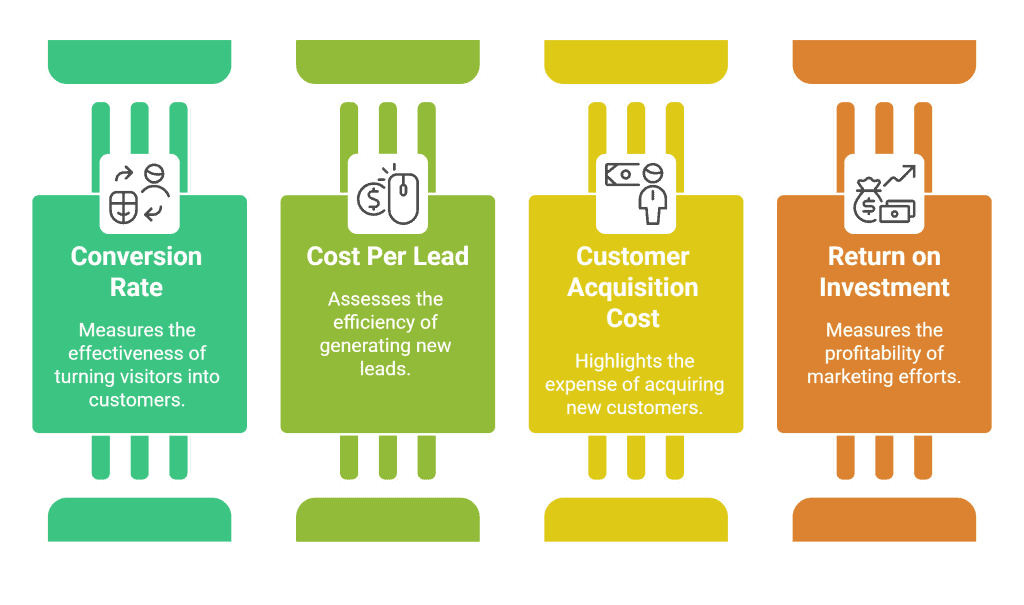
Conversion Rate
Conversion rates reveal how effectively visitors become enquiries or customers.
Cost Per Lead (CPL)
CPL measures lead generation efficiency.
Customer Acquisition Cost (CAC)
CAC highlights how much it costs to win new customers.
Return on Investment (ROI)
ROI remains one of the most important commercial marketing metrics because it measures profitability directly. Opportunity Marketing’s ROI-led methodology consistently reinforces this principle.
Online Marketing Success Starts with Strategy
Small businesses frequently struggle with online marketing because they begin with tactics instead of strategy. Social media activity, advertising, SEO, and content marketing only perform effectively when connected to clear objectives, audience understanding, and measurable outcomes.
Businesses that understand their audience, strengthen website foundations, create useful content, monitor performance carefully, and focus on ROI place themselves in a far stronger position for sustainable growth. Marketing should operate as a structured commercial function rather than random activity.
Opportunity Marketing’s strategy-first philosophy reflects this exact approach by helping SMEs reduce waste, improve marketing clarity, and build measurable long-term growth.
Work With Opportunity Marketing
Many small businesses struggle with online marketing because they lack a clear strategy, measurable objectives, and a structured framework for growth. Opportunity Marketing helps SMEs move beyond random marketing activity by developing commercially focused marketing strategies that align with business goals, improve ROI, and reduce wasted spending. Our strategy-first approach helps businesses identify the right audiences, improve lead generation performance, strengthen online visibility, and build marketing systems designed for sustainable long-term growth.
Whether your organisation needs support with SEO strategy, content marketing, lead generation, audience targeting, conversion improvement, or overall digital marketing direction, Opportunity Marketing provides practical consultancy, mentoring, and strategic guidance tailored to SMEs. We work with business owners, directors, managers, consultants, and growing organisations that want clearer marketing direction, better performance measurement, and stronger commercial outcomes from their online marketing investment. Our focus always remains on measurable growth, accountability, and building marketing activity around genuine business objectives rather than vanity metrics or disconnected tactics.
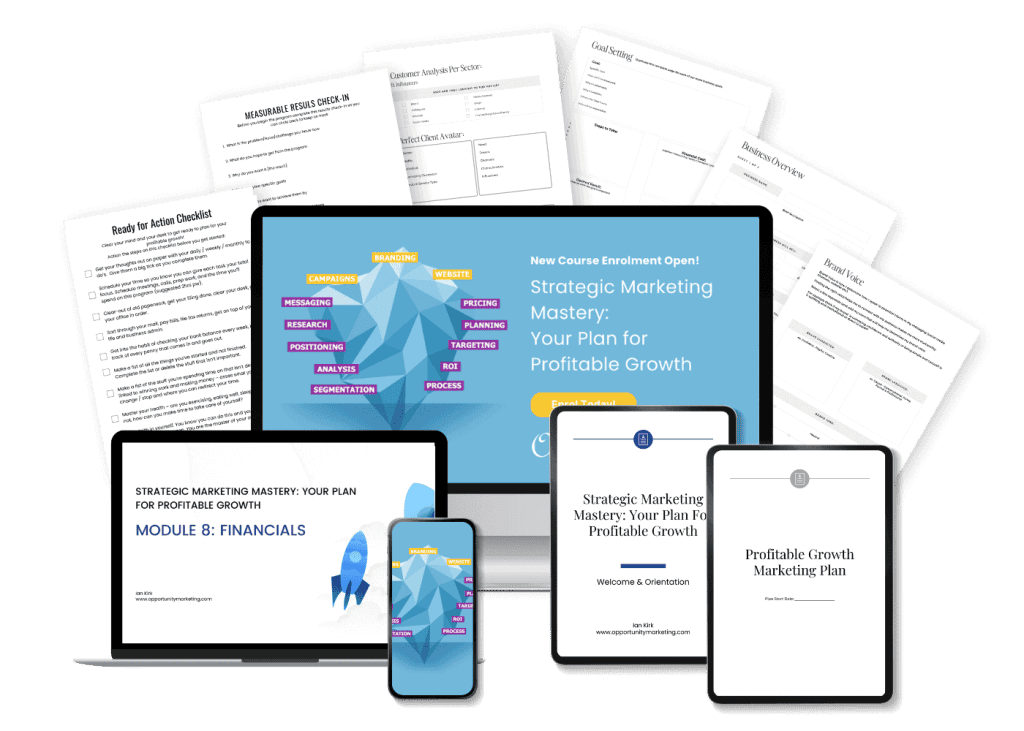
Strategic Marketing Mastery
Opportunity Marketing’s Strategic Marketing Mastery course is designed for SMEs, business owners, marketers, consultants, and professionals who want to build stronger strategic marketing knowledge and improve commercial marketing performance. The course helps learners understand how to create structured marketing strategies, improve audience targeting, strengthen online marketing effectiveness, and make more informed marketing decisions using data, analysis, and measurable objectives. Strategic Marketing Mastery supports organisations looking to improve marketing clarity, reduce inefficiencies, and build marketing systems that contribute directly to sustainable business growth.
Marketing Strategy and Consultancy Support
Opportunity Marketing also provides strategic consultancy and outsourced marketing support for businesses that require practical implementation guidance alongside strategic planning. Our services include marketing strategy development, marketing health check audits, outsourced marketing support, mentoring, ROI-focused planning, and performance improvement consultancy tailored specifically to SMEs and growing organisations. Every recommendation is built around commercial logic, measurable outcomes, and long-term growth planning rather than short-term marketing activity alone.
Learn More About Opportunity Marketing
Businesses looking to improve online marketing performance, strengthen strategic direction, and create more measurable marketing systems can learn more through Opportunity Marketing’s consultancy and training services.
📞 Call: 0333 320 4108
📧 Email: info@opportunitymarketing.co.uk


Ian Kirk
Founder at Opportunity Marketing
Ian is the founder of Opportunity Marketing marketing, with over 18 years of experience in successfully setting up marketing departments, creating marketing strategies and implementing these strategies across a wide number of SME companies in both the B2B and B2C sectors through a variety of channels.

A-Z OF MARKETING
A complete guide that simplifies the wonderful world of marketing.
 Download Now